

International students are vital to the academic missions and finances of U.S. and U.K. colleges and universities. In turn, those nations maintain complex student visa laws to regulate their entry, study, and post-graduate activities. These laws give institutions and students certain rights and obligations, but are often in flux due to government policy changes. Over recent years, both the U.S. and U.K. have issued new executive orders, regulations, and legislation affecting student visas – from tighter security vetting to restrictions on dependents – with profound effects on foreign scholars and the institutions that host them. Understanding how student visas work and the legal protections in place is essential for navigating these shifts in international student policy. We will examine the visa frameworks in the U.S. and U.K., highlights key recent policy developments, and explores the legal protections for student visa holders, institutional responsibilities, and student rights when policies change.
Overview of Student Visa Frameworks
United States (F-1, M-1, J-1 Visas)
In the U.S., the most common student visa is the F-1 (Academic Student) visa. To qualify, a student must be accepted by a Student and Exchange Visitor Program (SEVP)-certified school, enroll full-time, and have sufficient funds and English proficiency. The school issues a Form I-20, which the student uses to apply at a U.S. consulate. At the visa interview, consular officers verify “nonimmigrant intent” – the student’s plan to return home after studies – and check admissibility. Under current guidance, officers focus on the student’s immediate intent, not speculative future events. Once granted, the F-1 visa allows enrollment for the “duration of status” (active course of study plus optional practical training and grace periods). F-1 students may work on campus (limited hours) and pursue Optional Practical Training (OPT) post-graduation, subject to certain eligibility (e.g. STEM degree holders can seek a 24-month OPT extension under DHS rules).
Another category is the M-1 (Vocational Student) visa, for non-academic or vocational programs. Like F-1, it requires SEVP certification and evidence of intent and funds, but M-1 students have stricter limits on study duration and virtually no off-campus work options. Exchange visitors (including academic scholars and students) come under J-1 visas, which have separate rules (often associated with sponsoring organizations and specific programs).
By law, F-1 and M-1 students must maintain full-time enrollment, make normal progress toward their degrees, and follow all visa conditions (no unauthorized work, timely record updates, etc.). The Student and Exchange Visitor Information System (SEVIS) tracks each student’s status. If a student violates status (for example, dropping out or taking unauthorized leave), the school must notify U.S. Immigration and Customs Enforcement (ICE) and the student typically loses legal status, triggering deportation risk. Students whose status ends must generally either change to another visa type (if eligible) or depart the country within the grace period (60 days after program completion for F-1).
Universities have key academic compliance duties under the Student and Exchange Visitor Program (SEVP). They must certify students’ admission, report enrollment and course changes, and provide updates in SEVIS when a student falls out of status or transfers. Compliance failures (e.g. failing to report dropouts or enrolling students who cannot legally attend) can lead to audits or loss of the school’s visa sponsor license. In recent policy announcements, U.S. authorities have emphasized these compliance obligations (for example, proposals to increase oversight of student visa issuance and “rogue” agents behind international recruitment).
United Kingdom (Student Route, formerly Tier 4)
In the U.K., international students apply under the Student route (formerly Tier 4 of the Points-Based System). Applicants must hold a confirmed Confirmation of Acceptance for Studies (CAS) from a licensed educational institution, meet financial and English language requirements, and apply before their course starts. They must pay the Immigration Health Surcharge to access NHS care. Once granted, a Student visa is typically valid for the duration of the course plus a short period after (usually 4–6 months). During study, international students may work part-time (usually up to 20 hours/week during term) and engage in mandatory placements. After graduation, many can switch to the Graduate visa (post-study work), which currently allows remaining in the U.K. for up to 2 years (or 3 years for PhDs) to work or seek employment.
Dependents (spouses and children) of international students have traditionally been allowed on Student visas only under certain conditions (generally postgraduate students and those with government-sponsored courses). Dependents have their own visa rights. Importantly, students and their dependents may not access public funds (welfare) and must abide by visa conditions.
U.K. universities also face strict sponsorship duties. To issue a CAS, institutions must be licensed sponsors. They must monitor students’ attendance and progress, report missed classes, and ensure students do not breach their visa conditions (for example, by working illegally or missing significant study without approval). The Home Office conducts Sponsor Licence compliance assessments (BCAs) where institutions must meet benchmarks: historically 90% course enrolment and 85% completion with a refusal rate below 10%. Schools that fall below these may lose their licence and the ability to host international students. Future proposals aim to tighten these metrics further.
Recent U.S. Policy Developments
The last few years (especially 2025) have seen a roller-coaster of student visa policy shifts in the U.S., as different administrations pursued contrasting agendas on immigration and security.
-
COVID-19 Flexibilities and Reversals: During the pandemic, the Trump administration initially allowed remote classes for international students (SEVP guidance in early 2020) but later rescinded those flexibilities. In June 2020, ICE announced that F-1 and M-1 students taking entirely online courses would have to leave the U.S. or transfer to in-person programs. This created panic until courts intervened. When President Biden took office, his administration quickly reversed the online-course ban (March 2021), allowing affected students to remain or re-enter as long as they maintained a SEVP record. SEVP COVID-19 guidance formally ended in May 2023, but the Biden administration tried to extend some flexibility during the transition.
-
Consular Processing and Visa Interviews: In 2020, the U.S. State Department paused and scaled back visa interview appointments globally due to health and staffing issues. Starting August 2020, it also announced a temporary expansion of interview waivers for visa renewals (extending the 12-month rule to 48 months for many applicants). The Biden administration has periodically extended these COVID-era waivers for students; for example, consulates can often renew F-1 visas without an interview if the previous visa expired within the last few years and no ineligibilities are known. Most recently, the DOS confirmed a new waiver policy (effective Jan 1, 2024) allowing any visa holder who had a prior visa (other than a B-class tourist visa) that expired within 48 months to get an interview waiver. This change (published Dec. 21, 2023) effectively broadened the waiver to more applicants. In February 2025, a further DOS update retained broad interview waivers (including diplomats and previously issued visas up to 12 months old) as the new baseline.
-
Security and Vetting (Social Media Checks): Heightened security screening has targeted student visa applicants. In 2019 the Trump administration mandated social media scrutiny for many visa applicants. In early 2025, the State Department sent cable instructions to consulates to “pause” scheduling new student and exchange visitor visas while it rolled out expanded social media vettingnpr.org. The cable instructed consulates not to add new student visa appointments “in preparation for an expansion of required social media screening and vetting”npr.org. This is a temporary measure, but it underscores a broader trend: both the Trump and Biden administrations have intensified background checks on international students. A 2023 NPR report noted that delays in visa processing could hinder enrollment, signaling that security policies (like social media checks) may slow down students arriving for fall termsnpr.orgnpr.org.
-
Cancellation of Legal Status: In mid-2020, the Trump administration abruptly revoked the F-1 status of thousands of students (alleging visa violations from minor criminal infractions or name mismatches) without individual notice. Students filed lawsuits, and courts preliminarily found the actions lacked due process. Under pressure, ICE announced it would restore status for those students while formalizing new guidelines. The resulting policy expanded the grounds for termination: notably, if a student’s visa is revoked by the State Department, ICE may now cancel their status, whereas previously a student could remain in the U.S. despite a visa cancellation. New ICE guidance also permits status cancellation if the student’s name appears in certain criminal or fingerprint databases in ways that were not grounds for termination before. Attorneys lamented that the new rules “gave carte blanche” to cancel visas for minor infractions, effectively legitimizing actions that had seemed arbitrary. These episodes highlight how executive actions and guidance (often administrative rather than legislative) can dramatically affect student visa holders, who have limited ability to appeal such internal immigration decisions.
-
Non-Immigrant Intent Guidance: One longstanding U.S. requirement is that F-1 applicants demonstrate they intend to depart the U.S. after studies. Under Secretary of State Rice in 2009 (the “Rice cable”), consular officers were told to apply this intent test flexibly for students. The Trump administration reversed course, emphasizing intent more strictly. In January 2022, the State Department issued new guidance restoring the Rice policy: consular officers should assess a student’s intent based on present plans, not hypothetical future contingencies. This is a regulatory change (Department of State guidance, not a new law) but significantly eases the interview process, sending a more welcoming message to international students.
-
Optional Practical Training (OPT) and Other Regulations: The Biden administration has also addressed the transition from student to worker visas. In late 2024, DHS finalized rules that benefit STEM graduates and workers: for example, it permanently extended the automatic work-authorized period for timely filed Employment Authorization Document (EAD) renewals from 180 to 540 days. While not exclusively a student visa issue, this STEM OPT rule protects F-1 graduates from losing employment authorization due to USCIS delays, effectively stabilizing their status. Meanwhile, on the regulatory front, new rules have adjusted STEM degree lists, tightened H-1B hiring practices, and proposed changes to the famed “cap-gap” extension for F-1 holders who file H-1B petitions.
In sum, U.S. international student policy has seen rapid swings: from pandemic-era flexibility to national security tightening, and from restrictive bans back to pro-student adjustments. Throughout, student visa law in the U.S. has been shaped by a mix of executive orders, DHS/State regulatory guidance, and litigation. This patchwork approach means that international students and universities must stay vigilant about both presidential directives and agency rules that can change with little notice.
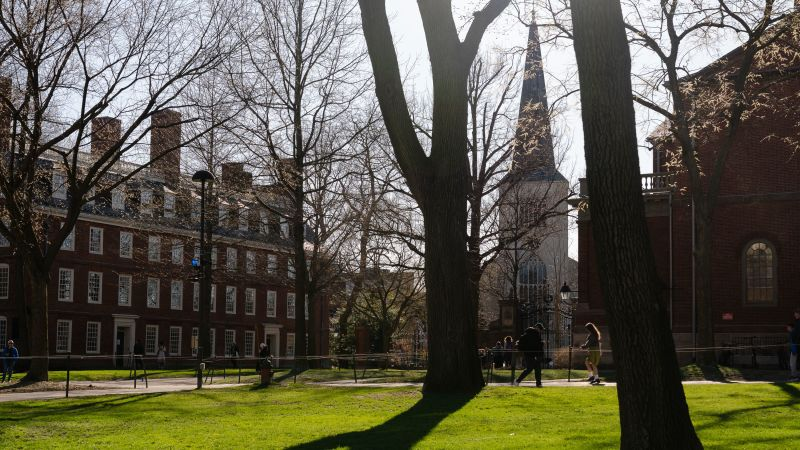
An instance was the historic Harvard University which exemplifies the U.S. higher education draw for global students. Recent U.S. visa policies – such as the attempted revocation of Harvard’s ability to sponsor foreign students – demonstrated how visa regulations and campus recruitment intersect. Courts ultimately blocked that revocation, underscoring that universities play a central role in student visa law.

Recent U.K. Policy Developments
The U.K. has likewise tightened and reformed its student visa regime under the banner of reducing net migration. Key changes include:
-
Dependents Ban (Jan 2024): Beginning January 1, 2024, new U.K. student visa holders (except PhD researchers or those on government-sponsored scholarships) can no longer bring family dependents on a Student visa. The government announced this measure in May 2023 as part of a broad “immigration crackdown.” According to the Home Office, international students prior to this change were bringing unusually high numbers of dependents – nearly 153,000 in the year to Sept 2023, a 930% increase from 2019. The new rule aims to curb abuse of the student route as a “backdoor to work,” but critics say it will deter potential students who rely on family support. For students already holding visas, existing dependents remain until the visa expires; the new restriction applies prospectively to applications as of Jan 2024.
-
Crackdown on “Student Visa Abuse” (2024): In mid-2024, the government unveiled a package of measures to “tackle student visa abuse”. These proposals, now partly in effect, include mandatory agent oversight (all recruitment agents must join a government-approved framework) and higher financial and language requirements for applicants. The Home Office will also enforce new compliance standards for sponsoring institutions. For example, universities whose international students repeatedly fail visas or drop out could lose their sponsor licence. Official guidance warns that sponsors admitting students who then “fail to pass our visa checks, enrol or complete their courses” will face sanctions. Additionally, the government plans to require in-person classes for most visa students by limiting online course allowances. These changes (effective early 2024) have already contributed to a drop in student visa applications; data showed a 25% decline in applications across key routes in early 2024 compared to the previous year.
-
Graduate Visa Reductions (2025 Proposals): The Migration Advisory Committee (MAC) was asked to review the 2-year Graduate visa (post-study work) route. A May 2025 white paper proposed cutting this to 18 months for most graduates. The same proposals would impose a 6% “graduate levy” on international tuition fees, funneling funds to UK schools. If enacted, these reforms would make remaining in the UK after graduation harder, directly affecting international student policy. (These remain proposals; final legislation would be needed to make them law.)
-
Recruitment & Quality Rules: Beyond visa conditions, the UK is tightening recruitment. A “Stringent Framework” of approved recruitment agents has been introduced. Institutions must ensure agents do not mis-sell courses to overseas students. The government cites concerns about “rogue” agents pushing students toward substandard courses as justification. Universities must now monitor their agent networks closely, under new academic compliance expectations.
-
Points-Based Adjustments: Since Brexit, EU students now require visas under the points system, just like others. Current immigration rules give student applicants points for a valid CAS, English language, and maintenance funds. The Home Office has periodically adjusted financial requirements (e.g. increasing the required bank balance to cover living costs) and tightened English test criteria. For example, the 2023 proposals aim to standardize English-language testing to ensure consistent student preparedness. All such immigration rules are subject to regular parliamentary scrutiny and can change with short notice, meaning universities must update admissions guidance rapidly.
In sum, recent U.K. policy has swung toward stricter control of the student route. The legal framework (the Immigration Rules) now imposes harder eligibility and compliance burdens, with the aim of reducing overall migration numbers. These changes – often driven by political priorities on migration – directly affect academic institutions’ recruitment strategies and international students’ decisions.
Institutional Responsibilities and Compliance
Universities and colleges bear significant responsibility under student visa law. In both the U.S. and U.K., they act as gatekeepers for international education.
In the U.S., institutions must be SEVP-certified to admit F-1/M-1 students. They designate official school representatives (DSOs/PDSOs) who verify eligibility and update SEVIS on students’ status (full-time enrolment, program length, any status changes). Schools must report promptly if a student drops out or is dismissed, triggering termination of the SEVIS record. Failure to comply (e.g. admitting students who lack valid visas, or not reporting violations) can result in losing SEVP certification. Recent U.S. proposals would hold schools even more accountable: under immigration policy drafts, if an institution enrolls students who then fail to get visas or who drop out en masse, the school risks sanctions.
In the U.K., sponsor duties are explicitly spelled out. Institutions issuing CAS numbers must ensure students meet visa criteria and must monitor attendance. They submit a Student/Learner Monitoring Service (SMS) report if a student misses too many classes or abandons a course. The Home Office sets benchmarks (through the Basic Compliance Assessment) such as minimum 90% enrolment and 85% completion rates for sponsored students. According to government press releases, proposals will raise those to 95% and 90% respectively. Institutions that fall short face revocation of their student sponsor license. These enforcement measures make academic compliance a critical administrative task: universities must train staff on immigration rules, vet recruitment agents, and sometimes carry out additional English-language testing. The U.K. Home Office has warned that failure to “pass” the revised compliance metrics could jeopardize a university’s ability to admit foreign students.
In practice, this means universities must stay current with policy. Many U.S. schools maintain dedicated international student offices, coordinate with immigration attorneys, and use SEVIS audits to check compliance. U.K. institutions likewise have dedicated international offices and compliance teams that deal with UK Visas & Immigration (UKVI) audits. They also often help students navigate visa paperwork and any issues that arise. For example, if a visa flight change or course withdrawal occurs, the university must notify the government to prevent unlawful presence. In an era of shifting rules, institutions also update their policies: after the 2024 dependent ban, universities have updated their “offer letter” templates and student handbooks to reflect that most new students cannot bring family. Such institutional responsibility is part of the legal landscape: by law, universities are accountable to the immigration system, and violations (whether by wilful misconduct or oversight) can impact the whole campus community.
Student Rights, Challenges, and Legal Recourse
International students have relatively limited direct power in immigration proceedings, but some protections and avenues for recourse exist.
In the U.S., a student whose visa application is denied generally cannot appeal the consular decision; they may reapply, often after addressing the issue (for instance, by providing stronger evidence of intent or credentials). If in the U.S., a student can request an administrative review of certain USCIS decisions (e.g. denials of change-of-status), but many status violations (such as out-of-status due to dropping below full-time enrollment) carry no formal appeal – the student simply loses legal status and may face removal.
That said, there are constitutional and procedural limits on government actions. The 2020 visa cancellation spree illustrated this: students filed federal lawsuits arguing the government acted with no notice or opportunity to be heard. Courts have at times granted injunctions on due process grounds. For example, U.S. immigration law generally requires that adverse actions be justified by regulation; in the Harvard case NPR reported, judges blocked visa revocations in part because the administration had no clear regulation authorizing it. Similarly, the ICE cancellations drew judicial scrutiny, and the government ultimately agreed to issue new internal guidelines. In effect, litigation forced the administration to clarify the rules (making some past actions retroactively permissible, though attorneys criticized this as “covering up” past arbitrariness).
Thus, the U.S. legal mechanisms for student protections are mainly through the courts and the Administrative Procedure Act (APA). When policies are introduced as regulations, they must go through notice-and-comment rulemaking; if not, students and universities might challenge them as “arbitrary” under the APA. Since visa issuance is largely an executive action, students rely on lawsuits alleging due process or equal protection violations if policies appear capricious or discriminatory. So far, high-profile challenges have focused on egregious actions (like mass status terminations or university de-certifications). In practice, many students rely on advocacy groups (NAFSA, The Presidents’ Alliance, immigration clinics) to bring class actions or amicus briefs on behalf of affected students. These cases can create temporary protections; for instance, courts enjoined enforcement of the ban on Harvard and other universities, citing the immediate harm to students.
In the U.K., students have slightly different rights. If a visa application is refused, there is generally no broad statutory right of appeal on the merits for student visas. Instead, applicants can apply for Administrative Review (a quick internal reconsideration) if eligible, but this is limited. Often, the recourse is to reapply for the visa with better evidence or to challenge a decision by judicial review in the Administrative Court. Judicial review is usually costly and only succeeds if the immigration rule was applied illegally or irrationally – a high bar. For example, if a student can show the Home Office misinterpreted guidance or breached its own rules, a court might quash the decision. During the transition to new rules (like the dependents ban), the government did provide a grace period and grandfathering clauses, reducing legal complaints.
Both countries do afford general civil and educational rights: as residents/temporary residents, international students in the U.S. are protected from discrimination under Title VI (race/national origin) and Title IX, and U.K. students are protected by the Equality Act (e.g. religion, nationality, disability). Students can seek legal remedies in those contexts like any other student. But such rights are separate from immigration status. In short, legal protections for student visa holders exist but are often indirect: they arise from broader laws and judicial oversight rather than a special “student visa protection act.”
Institutions themselves sometimes act as de facto protectors. Many universities offer legal advisory services or help place students with immigration attorneys. They also lobby governments; for example, associations have petitioned State Department and Congress to prioritize student visa processing or to restore status in emergencies. During 2020–21, dozens of higher education institutions joined amicus briefs arguing that reversing the online-course prohibition was lawful. Though such advocacy is not a legal “mechanism” per se, it is part of the ecosystem of protection.
Challenges and Considerations
Changes in student visa policy create real challenges:
-
Uncertainty and Delays: When governments announce new rules (e.g. Trump’s 2020 visas-withdrawal directive or the U.K.’s 2024 rules on dependents), students scramble to adapt. Delays in visa interviews can cause students to miss enrollment deadlines. Institutions then face sudden fluctuations in enrollment and must decide whether to open deferment options or online alternatives.
-
Financial and Personal Hardship: Restricting dependents, work, or post-study rights can alter students’ life plans. For example, barring dependents forces families to choose between separation or foregoing education abroad. Reducing the Graduate visa duration (as proposed in 2025) could make the U.K. less competitive. Students have little recourse if such rules change after they enroll (other than potentially finishing quickly or altering course).
-
Institutional Burdens: Stricter compliance means universities must invest in monitoring and reporting systems. The Administrative Responsibility often requires hiring more compliance officers or legal consultants. Non-compliance risks not only fines but the inability to enroll future international students. For many U.K. universities, losing the sponsor licence on any count would be catastrophic.
-
Student Rights Awareness: International students may not realize how small the margin is for error. For instance, a minor traffic fine contributed to a student’s status being flagged and revoked under 2020 ICE guidance. Knowing one’s rights – such as the ability to request a review, or to contact a Member of Parliament (in the U.K.) – can be critical in crisis moments.
-
Changing Political Context: Both the U.S. and U.K. show how immigration policy can shift dramatically with elections or political pressure. Institutions must thus stay alert. For example, a change in U.S. administration can quickly reverse Trump policies (as seen with COVID guidance and visa interviews), and similarly, a change in U.K. government or public opinion could roll back restrictive measures. Universities often engage in long-term contingency planning for such shifts.
In light of these factors, academic institutions must take a proactive stance. They should educate students about visa requirements (for example, advising them on how full-time credit loads, leave-of-absence, or travel could affect status), and encourage engagement with campus international offices at the first sign of trouble. Many universities provide workshops or orientation sessions on immigration issues. They may also build alliances with other schools to lobby for sensible policy. For instance, groups like the American Council on Education (ACE) and Universities UK regularly issue policy recommendations; ACE in 2021 publicly urged the restoration of flexible visa rules to keep U.S. universities “first-choice” for global talent.
From the students’ perspective, understanding the law and seeking help early is crucial. For example, if a visa is rejected or revoked, students should know if they can appeal or reapply, and within what timeframe. Keeping personal records, transcripts, and proof of compliance (such as graduation status) can help in case of disputes. Students should also follow government and school announcements closely, as compliance with new regulations often depends on timely actions (e.g. registering with police if required, updating addresses, etc.).
Conclusion
The legal protections for student visa holders in the U.S. and U.K. are embedded in complex immigration statutes and regulations that often change with little notice. Both countries have robust systems to admit and regulate international students, but recent policy shifts – through executive actions, new laws, and administrative guidance – have tested those systems. For academic institutions, this means heightened compliance and the need to advocate for stable policies. For students, it means vigilance and understanding of their rights under immigration and administrative law.
Institutions and students alike must view the landscape as dynamic. On the one hand, courts and rulemaking processes can and do offer avenues for recourse when policies are arbitrary (as seen when U.S. judges halted visa cancellations lacking due process). On the other hand, the inherent limits on challenging visa decisions mean that “protection” often requires institutional support and political pressure. Ultimately, the best protection comes from staying informed and prepared. Universities should continuously train staff on the latest regulations (in line with academic compliance mandates) and maintain open channels for students to report concerns. Meanwhile, international students should seek advice, either from university advisors or qualified immigration lawyers, to ensure they understand the nuances of student visa law.
As the examples above show, government policies can swing from welcoming to restrictive depending on broader immigration goals. The U.S. has alternated between easing vetting and adding new screening layers. The U.K. has pursued aggressive cuts in migration via the student route, impacting family reunification and work prospects. In all cases, education stakeholders must be ready to adapt. By combining careful compliance with strategic advocacy and legal awareness, academic institutions and student communities can navigate these policy changes more safely, ensuring that the promise of global education remains protected even in uncertain times.