
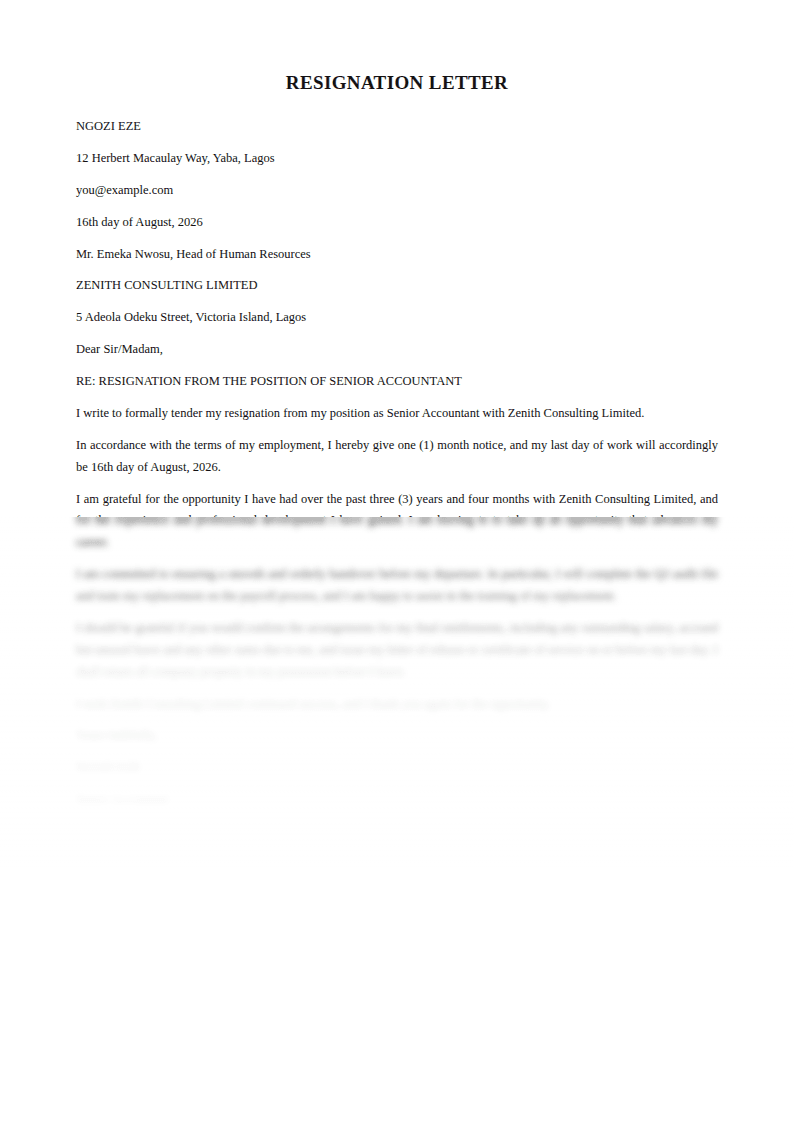
A resignation letter is a formal document written by an employee to notify their employer of their intention to leave their current position. Utilizing a formal resignation letter template ensures that it serves as a professional and courteous way to announce your decision to resign and provides essential details about your departure.
Use Case Scenario for a Resignation Letter
Imagine you’ve accepted a new job offer, decided to pursue further education, or need to leave your current role for personal reasons. A resignation letter becomes your formal way to communicate this decision. In such cases, a formal resignation letter template is commonly used. It's commonly used in the following situations:
- Career advancement opportunities
- Work-life balance considerations
- Relocation or family commitments
- Pursuing new professional interests
Providing a resignation letter ensures a smooth transition and maintains a positive relationship with your employer, which could be beneficial for future networking or references.
Important Parts of a Resignation Letter
A well-written resignation letter typically includes the following sections, and a formal resignation letter template can guide you in structuring these effectively:
- Header with Contact Information
- Include your name, address, and contact details.
- Add the date and the recipient's details (manager's name, job title, and company name).
- Formal Greeting
- Address your manager or supervisor professionally, e.g., Dear [Manager's Name].
- Statement of Resignation
- Clearly state your intent to resign and include the last working day. Example: I am writing to formally resign from my position as , effective .
- Reason for Resignation (Optional)
- You can briefly explain your decision, such as to pursue a new career opportunity or for personal reasons, but this is not mandatory.
- Acknowledgment of Experience
- Show gratitude for the opportunity. For example: I sincerely appreciate the opportunities for professional growth and the support provided during my time with .
- Transition Offer
- Express your willingness to assist during the transition period, e.g., I am happy to help train my replacement or ensure a smooth handover of my responsibilities.
- Closing and Signature
- End with a polite closing such as Sincerely or Best regards, followed by your name and signature (if submitting a hard copy).
Conclusion
A resignation letter is an essential step in leaving your job professionally and respectfully. By including key details and maintaining a positive tone, you ensure a smooth transition and preserve your professional reputation. Whether you're looking for a formal resignation letter template or tips on how to resign gracefully, LegalDoc by LegalDoc is the where to be.