
Real Estate Agents
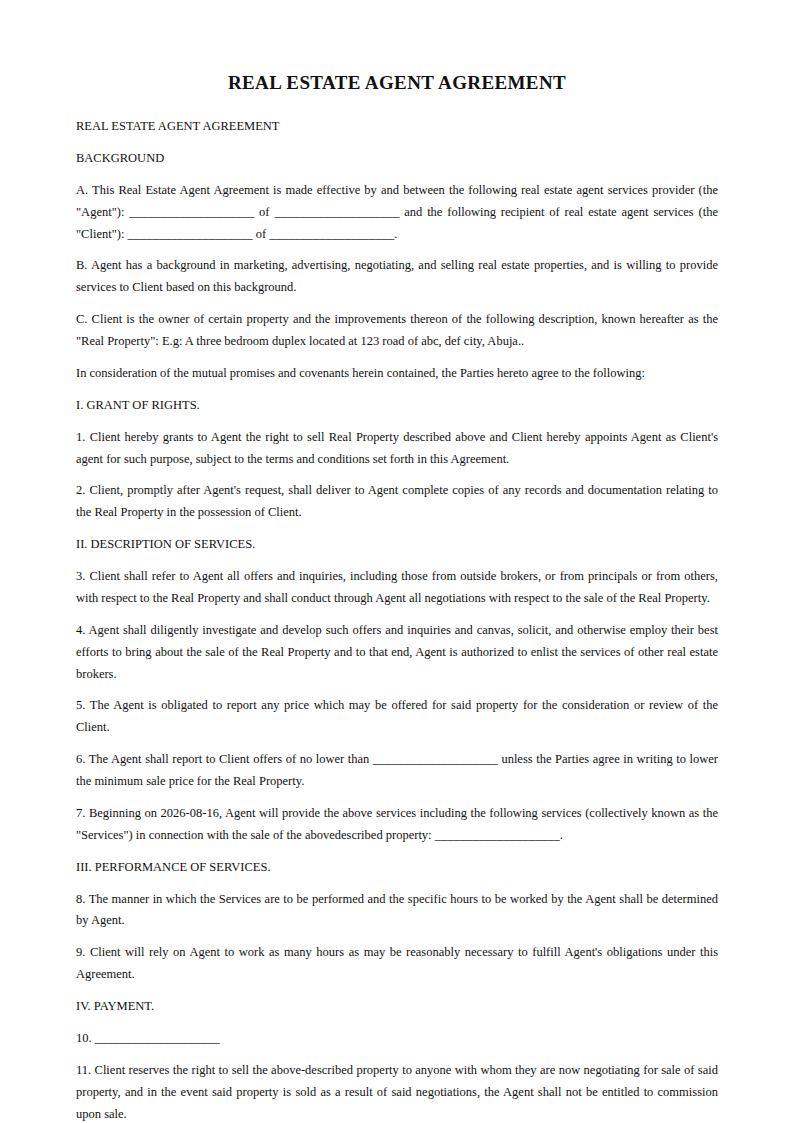
Real estate agents play a crucial role in the property market, connecting buyers with sellers, and helping renters find their ideal homes. Equally important is the real estate agent agreement, a contract that outlines the terms and responsibilities between agents and their clients or brokerages. Whether you're a homeowner, investor, or an aspiring real estate professional, understanding these topics is essential.
What Are Real Estate Agents?
Real estate agents are licensed professionals who help facilitate property transactions. Their key responsibilities include:
- Listing Properties: Marketing homes for sale or rent.
- Negotiating Deals: Helping both buyers and sellers reach mutually beneficial agreements.
- Advising Clients: Providing insights on market trends, property values, and legal requirements.
- Managing Transactions: Coordinating paperwork, inspections, and closings.
What Is a Real Estate Agent Agreement?
A real estate agent agreement is a legally binding contract between a real estate agent (or brokerage) and a client, outlining the terms under which the agent will provide services. There are various types of agreements, including:
- Listing Agreements: Contracts with sellers to market their property.
- Buyer Representation Agreements: Contracts with buyers to help them find a home.
- Commission Agreements: Documents that detail how agents are compensated for their services.
Key Components of a Real Estate Agent Agreement
-
Parties Involved:Clearly identify the real estate agent, brokerage, and client, including contact details.
-
Scope of Services:Detail the responsibilities of the agent, such as marketing, negotiation, and transaction coordination.
-
Term and Termination:Specify the duration of the agreement and conditions under which either party can terminate the contract.
-
Compensation and Commission:Outline how the agent will be paid—whether through a flat fee, a percentage of the sale, or other methods. This section should also include details on bonus structures or additional expenses.
-
Legal and Regulatory Compliance:Ensure the agreement adheres to local, state, and federal regulations, and that both parties understand their legal obligations.
-
Confidentiality and Disclosures:Include clauses that protect sensitive information and outline disclosure responsibilities during the transaction.
-
Dispute Resolution:Provide mechanisms for resolving disputes, such as mediation or arbitration.
Benefits of Using a Real Estate Agent Agreement
- Clarity and Transparency:Clearly outlines the expectations and responsibilities, reducing misunderstandings.
- Legal Protection:Provides legal recourse for both parties if terms are breached.
- Enhanced Professionalism:Demonstrates a commitment to best practices and ethical conduct.
- Efficient Transaction Management:Streamlines the process by establishing clear roles and responsibilities from the start.
For those seeking a standardized contract template, numerous resources are available online to help draft a comprehensive real estate agent agreement.
Frequently Asked Questions (FAQ) on Real Estate Agents
1. What is a real estate agent agreement?
A real estate agent agreement is a contract that defines the working relationship between a real estate agent (or brokerage) and their client. It covers the scope of services, commission structure, duration, and legal responsibilities.
2. How do I choose the right real estate agent?
Choosing the right real estate agent involves researching their experience, client reviews, local market expertise, and commission structure. Look for agents who specialize in your area and who use effective marketing strategies.
3. What are the typical commission structures in a real estate agent agreement?
Commission structures can vary but typically include a percentage of the property sale price or a flat fee. Some agreements may also include bonus incentives for reaching certain milestones.
4. How long does a real estate agent agreement usually last?
The duration of a real estate agent agreement depends on the type of contract. Listing agreements often last between 3 to 6 months, while buyer representation agreements might be shorter or tied to the successful purchase of a property.
5. Can I negotiate the terms of a real estate agent agreement?
Yes, most terms in a real estate agent agreement are negotiable. Clients and agents can discuss commission rates, the scope of services, and termination clauses to better suit their needs.
6. Is a real estate agent considered self-employed?
Many real estate agents work as independent contractors, meaning they are considered self-employed. This affects their tax obligations, benefits, and how they manage business expenses.
7. What should I look for in a real estate agent contract?
Key points to review in a real estate agent contract include:
- Detailed description of services
- Clear commission and payment terms
- Duration and termination conditions
- Legal obligations and dispute resolution clauses
8. What happens if the agreement is breached by either party?
If either party breaches the agreement, legal remedies may include termination of the contract, claims for damages, or other actions as defined in the dispute resolution clause.
9. How do real estate agents market properties?
Real estate agents use various strategies including online listings, open houses, social media marketing, and traditional print advertising. Effective marketing is a crucial component of their service offering.
10. Are there online templates for real estate agent agreements?
Yes, there are many online resources and templates available to draft a comprehensive real estate agent agreement. These templates often include customizable sections for commission structures, duration, and legal terms. For example, you can find useful templates on industry-related websites and legal resource platforms.
11. What legal obligations do real estate agents have?
Real estate agents must comply with state and federal laws, including fair housing regulations and disclosure requirements. They are also bound by ethical standards set by professional organizations such as the Real Estate Developers Association of Nigeria (REDAN) and Association of Estate Agents in Nigeria (AEAN).
12. How do I get started if I want to become a real estate agent?
Becoming a real estate agent typically involves completing pre-licensing courses, passing a state licensing exam, and joining a brokerage. Ongoing education and networking are key to a successful career in real estate.
13. What are the benefits of having a formal real estate agent agreement?
A formal agreement provides clarity, protects the interests of both parties, and sets clear expectations. It helps prevent disputes by clearly outlining commission, scope of services, and other vital details.
14. Can a real estate agent agreement be terminated early?
Yes, many agreements include termination clauses that allow for early termination under specific circumstances, such as breach of contract or mutual consent. It’s important to understand these clauses before signing.
15. What external resources can help me understand real estate agent agreements better?
For more information on real estate agent agreements and related topics, consider visiting: Real Estate Developers Association of Nigeria (REDAN) and Association of Estate Agents in Nigeria (AEAN).