
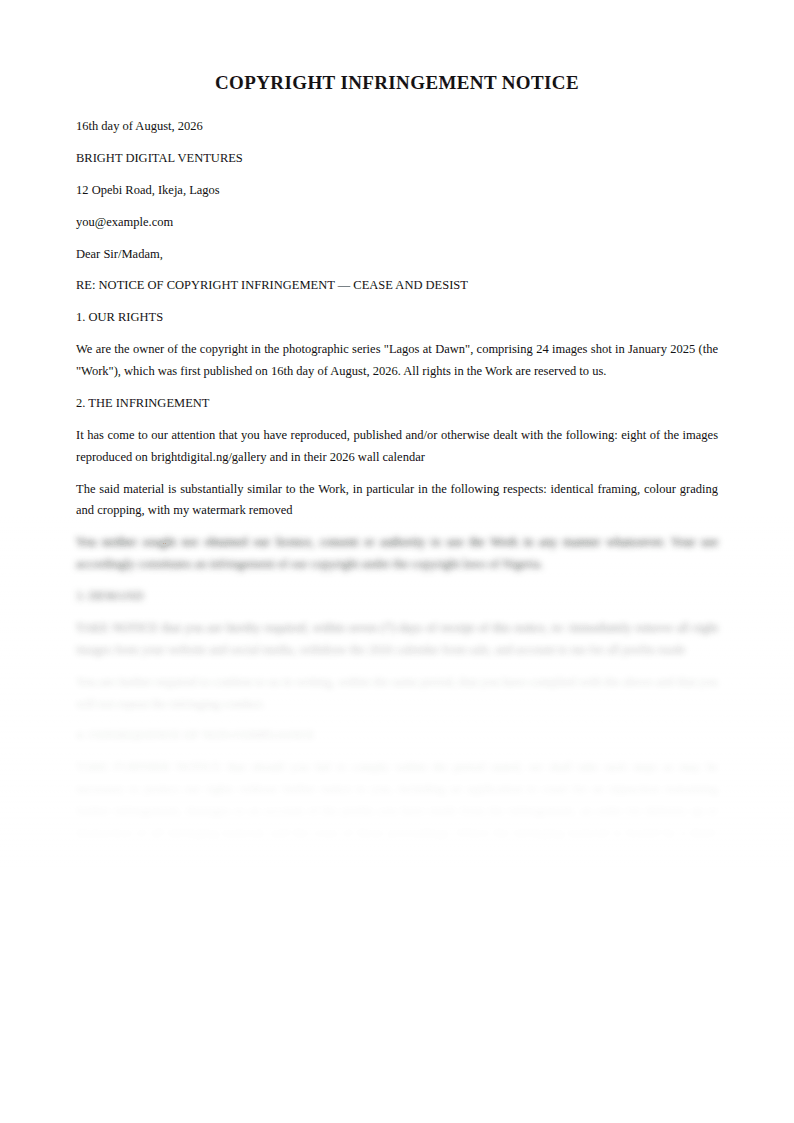
Copyright Infringement
What is Copyright Infringement?
Copyright infringement occurs when someone uses, reproduces, distributes, or publicly displays a copyrighted work without permission from the copyright owner. Copyright laws exist to protect original works such as books, music, films, artwork, software, and other forms of intellectual property. Violating these laws can result in legal action, financial penalties, and damage to one’s reputation.
Examples of Copyright Infringement
Understanding copyright infringement is crucial for avoiding legal trouble. Here are some common examples:
- Unauthorized Copying and Distribution – Downloading or distributing copyrighted movies, music, or software without the owner’s permission.
- Plagiarism – Using someone else’s written content, images, or creative work without proper credit.
- Pirated Software – Using or distributing software without purchasing the appropriate license.
- Unlicensed Use of Images – Copying and using photographs from websites without permission or licensing.
- Streaming Copyrighted Content – Hosting or streaming movies, TV shows, or sports events without proper authorization.
- Unauthorized Reproduction in Commercial Use – Printing and selling copyrighted material, such as books, artwork, or designs, without the owner's consent.
How to Avoid Copyright Infringement
To prevent copyright infringement and legal consequences, follow these best practices:
1. Understand Copyright Laws
Familiarize yourself with copyright laws in your country. For instance, in Nigeria, the Copyright Act 2022 governs intellectual property rights. Internationally, the Berne Convention ensures copyright protection across multiple countries.
2. Use Licensed or Public Domain Content
When using images, videos, or text, ensure they come from legitimate sources:
- Purchase stock images from sites like Shutterstock or Getty Images.
- Use public domain content from Pixabay or Unsplash.
- Verify Creative Commons licenses for legal usage.
3. Cite and Credit Sources Properly
If using someone else’s work, provide proper attribution by crediting the original creator and following fair use guidelines.
4. Obtain Written Permission or Licenses
For commercial use of copyrighted material, always get written permission or purchase the appropriate license.
5. Create Original Content
Avoid legal complications by developing unique and original work. If you need inspiration, use reference materials without copying them directly.
6. Use Copyright Check Tools
Utilize plagiarism checkers and copyright detection tools to ensure your content does not infringe on someone else’s work. Some useful tools include:
- Copyscape
- Grammarly Plagiarism Checker
Common FAQs About Copyright Infringement
1. What happens if I accidentally infringe copyright?
Accidental infringement can still result in legal consequences, including fines and takedown notices. If notified, comply immediately and seek legal counsel if necessary.
2. What is fair use, and does it protect me?
Fair use allows limited use of copyrighted material without permission, often for purposes like criticism, commentary, news reporting, teaching, and research. However, fair use is determined case by case.
3. Can I use copyrighted material if I give credit?
No. Giving credit does not replace the need for permission unless the work is licensed under Creative Commons with specific usage rights.
4. What are the penalties for copyright infringement?
Penalties vary based on severity but can include fines, lawsuits, removal of content, and in extreme cases, criminal charges.
5. Is it copyright infringement if I modify the original work?
Modifying a copyrighted work does not automatically make it legal. Unless the changes are transformative and meet fair use criteria, you still need permission.
Conclusion
Understanding and respecting copyright laws is essential for protecting intellectual property and avoiding legal repercussions. Whether you are a content creator, business owner, or consumer, following best practices and using authorized content ensures compliance with copyright regulations. For more legal insights, visit the Nigerian Copyright Commission.