
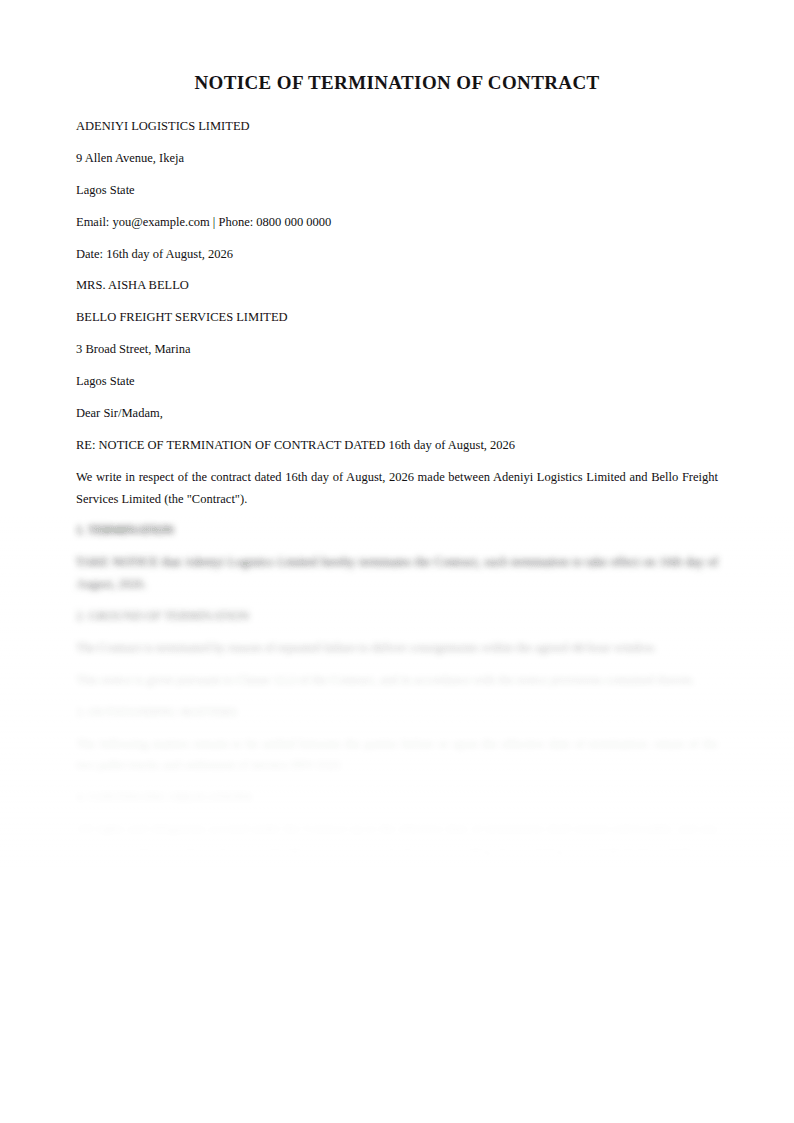
Notice of Termination in Nigeria: Ending a Contract Without Breaching It
A notice of termination is the written statement that brings a contract to an end. It sounds simple. It is also where a surprising number of businesses turn a clean exit into a claim against themselves.
The reason is almost always the same. They ended the contract the way that felt reasonable rather than the way the contract actually said, and by doing so they breached it.
Read the Termination Clause First
Before you write anything, find the clause and read it properly. It will tell you four things, and every one of them matters.
Who may terminate. Sometimes both parties, sometimes only one, sometimes only in defined circumstances.
How much notice. Thirty days, ninety days, or a period tied to an event.
In what form. Many contracts require written notice to a named address or by a specified method. An email where the contract required a courier can be ineffective.
When it takes effect. Some clauses require notice to expire at the end of a month or a term rather than on any date you choose.
Getting any of these wrong means you have not terminated. You have repudiated, and the other side can accept the repudiation and sue for their losses.
Termination for Convenience and for Cause
For convenience means ending the contract simply because you want to, where the contract allows it, by giving the stated notice. No reason is required and you should not give one. Volunteering a reason invites an argument about whether the reason is true.
For cause means ending it because the other side has breached. This usually requires the breach to be material, and often requires you to give them a period to remedy it first. Skipping the remedy period is a common and expensive error.
If you have grounds for both, terminating for convenience is frequently the cleaner route, because it does not require you to prove anything.
What the Notice Should Say
The parties and the contract. Identified by name, date and any reference number.
The clause you are relying on. Cite it. This is what makes the notice effective rather than merely informative.
The termination date. A specific date, calculated correctly from the notice period. Say whether notice runs from the date of the letter or the date of receipt, in line with the contract.
What happens in the meantime. Obligations usually continue during the notice period. Say so.
What must be returned or settled. Outstanding invoices, equipment, data, keys, access.
What survives. Confidentiality, intellectual property and dispute clauses commonly continue after termination.
Calculating the Date Correctly
This is where notices fail most often. If the contract says thirty days' written notice and does not say otherwise, count thirty clear days from when the notice is received, not from when you typed it.
If the clause says notice must expire at the end of a calendar month, a notice landing on the fifth does not end the contract on the fifth of the following month. It ends it at the end of that month. Read the words and count carefully, because a notice that expires on the wrong date can be wholly ineffective.
Serving It So It Counts
Use the method the contract requires, and to the address the contract names. If it allows email, keep the sent record. If it requires physical delivery, use a courier with a signed receipt.
Where the other party is a company registered at the Corporate Affairs Commission, service at the registered office is treated as good service under section 862 of the Companies and Allied Matters Act 2020, which is useful when the address you normally use is not the registered one.
Belt and braces is fine. Send it the contractual way and also by email, and keep everything.
After the Notice Goes Out
Keep performing until the termination date. Stopping early is itself a breach and undoes the care you took over the notice.
Deal with the wind down in writing: final invoices, return of property, transfer of data, removal of access. Where there is a dispute about money, that is a separate conversation from the termination and should be kept separate in correspondence.
Frequently Asked Questions About Terminating a Contract in Nigeria
What if the contract has no termination clause? A contract of indefinite duration can usually be ended on reasonable notice, and what is reasonable depends on the nature and length of the relationship. This is the situation where advice is worth taking, because reasonable notice is a judgement rather than a rule.
Can I terminate immediately if the other side breaches? Only where the breach is serious enough, or where the contract allows it, and usually only after giving any remedy period the contract requires. Terminating immediately without following that step often converts a good case into a bad one.
Does the notice have to give a reason? If you are terminating for convenience under a clause that allows it, no, and giving one can create arguments. If you are terminating for cause, the notice should set out the breach relied on.
Can I send it by email? Only if the contract permits email for notices. Many require written notice to a specified address, and an email in those circumstances can be ineffective. Check the notices clause, not just the termination clause.
What if I calculate the date wrongly? A notice that does not comply with the clause may be invalid, which means the contract continues and you may be in breach if you stop performing. If in doubt, serve a fresh, correctly calculated notice rather than argue about the first one.
Getting Your Termination Notice Right
Read next: how to terminate a contract in Nigeria. If it is an employment contract you are ending, termination against dismissal explains why the distinction matters.
A termination notice is a short document where every detail carries weight: the clause, the date, the method of service.
Answer a few questions and you will have a notice written for Nigerian use, citing the right clause and calculating the date properly, ready to download in Word and PDF.