
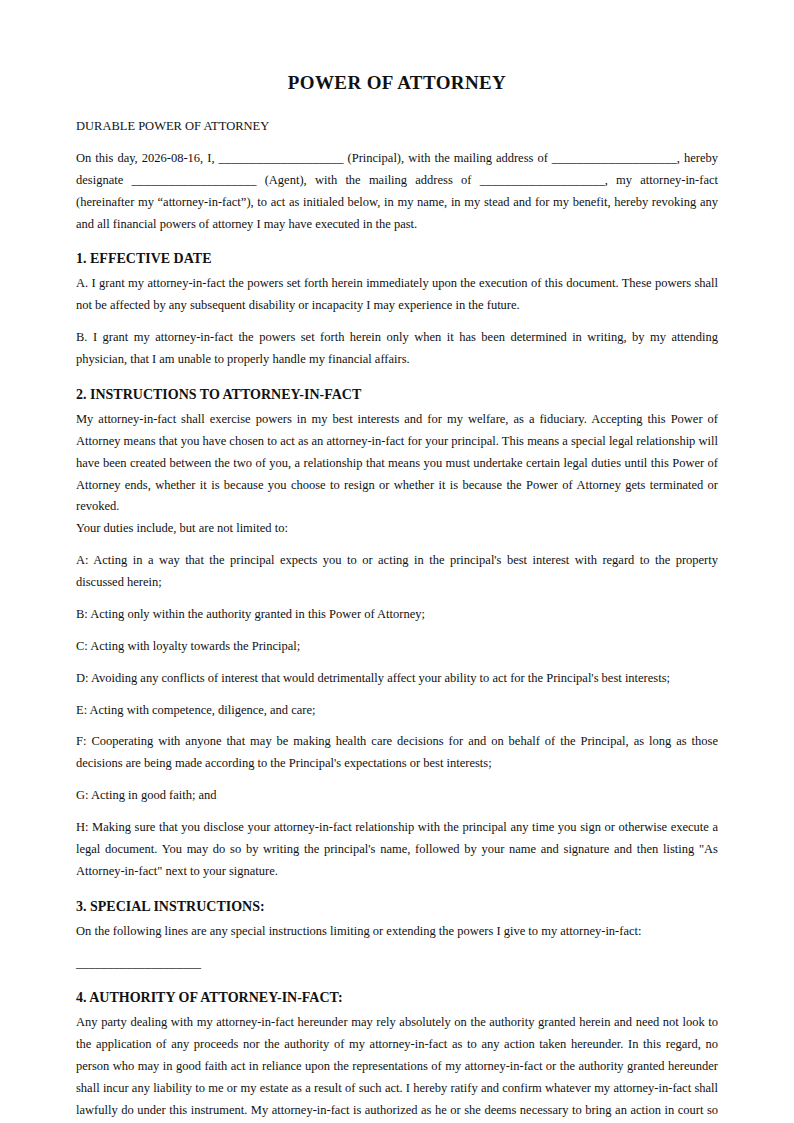
Power of Attorney in Nigeria: What You Are Really Signing
A power of attorney is a document by which one person, the donor, gives another person, the donee or attorney, authority to act on their behalf. It is one of the most useful documents in Nigerian practice and one of the most misunderstood.
The misunderstanding costs people property. A power of attorney is an instrument of delegation, not an instrument of transfer. It lets somebody act for you. It does not make them the owner of anything.
What a Power of Attorney Can and Cannot Do
It can let somebody sign documents for you, operate a bank account, collect rent, manage a property, represent you in a transaction, or handle a sale while you are out of the country.
It cannot transfer ownership of land to the person holding it. This is the point where Nigerian buyers lose money every year. Somebody is offered land and handed an irrevocable power of attorney instead of a deed of assignment, and is told it amounts to the same thing. It does not.
The Supreme Court has said this repeatedly: a power of attorney is not an instrument of transfer of title. It gives the donee authority to deal with the property on the donor's behalf. If you are buying land, what you need is a deed of assignment, followed by Governor's consent under the Land Use Act.
The Types You Will Come Across
General power of attorney. Broad authority over your affairs or a class of them. Powerful, and correspondingly risky, because the wording usually covers far more than the one thing you had in mind.
Special or limited power of attorney. Authority for one defined purpose: sell this particular property, operate this particular account, sign this particular contract. This is what most people actually need.
Irrevocable power of attorney. One that cannot be withdrawn, usually because it is given for valuable consideration and coupled with an interest. Commonly seen in land transactions, and commonly misused as a substitute for a proper transfer.
Enduring power of attorney. Intended to survive the donor losing mental capacity. Nigerian law on this is less developed than in some other jurisdictions, and it is an area where advice is worth paying for.
What Must Be In It
The parties, in full. Full legal names and addresses for both donor and donee. Initials and nicknames cause problems years later.
The powers, specifically. This is the heart of the document. List what the donee may do. Resist the temptation to add a broad catch-all clause unless you genuinely intend the donee to be able to do anything at all.
The property or account, identified. If it concerns land, describe it properly: address, survey plan number, title document reference.
When it starts and when it ends. An end date, or a defined event that ends it. A power of attorney with no expiry is a standing invitation.
Whether it is revocable. Say it plainly either way.
Execution and witnessing. Signed by the donor, and witnessed. Get this wrong and the rest does not matter.
Witnessing, Stamping and Registration
Three separate requirements that people routinely collapse into one.
Witnessing. The donor signs in the presence of a witness, who signs at the same time and writes their name, address and occupation. Do not use a witness who benefits under the document.
Stamping. Powers of attorney are stampable instruments under the Stamp Duties Act. Stamp it within the statutory window. An unstamped instrument can be objected to when you try to tender it in evidence, which is exactly the moment you need it most.
Registration. Where the power of attorney relates to land, it is registrable at the Lands Registry of the state where the land is. Registration puts the world on notice and is standard practice in Lagos and most other states.
Where the donor is outside Nigeria, the document is usually executed before a notary public in that country and then authenticated, so that it is recognised here. Do not skip the authentication step.
What Ends a Power of Attorney
A revocable power of attorney ends when the donor revokes it, when it expires by its own terms, when the purpose is completed, or on the death of the donor.
That last point catches families out constantly. A power of attorney dies with the donor. Somebody holding authority to sell a house loses it the moment the owner dies, no matter what the document says about being irrevocable. After death, authority comes from letters of administration or a grant of probate, not from a power of attorney.
If you are revoking, do it in writing, give notice to the donee, and give notice to anybody who has been dealing with them on the strength of it: the bank, the tenants, the land registry. A revocation nobody knows about does not protect you.
The Risks Worth Taking Seriously
You are handing another person the ability to bind you. The main protections are narrow drafting, a short life, and choosing the right person.
Be specific rather than general. Put an end date on it. Name one donee rather than several acting independently, or if you name more than one, say whether they must act jointly. Keep the original and give out certified copies rather than handing over the only signed version.
And read it before you sign. If somebody presents you with a power of attorney and is reluctant to let you take it away and study it, that reluctance is the most useful information in the room.
Frequently Asked Questions About Powers of Attorney in Nigeria
Does a power of attorney transfer ownership of land? No. It gives authority to act on the owner's behalf. Nigerian courts have said plainly that it is not an instrument of transfer of title. To transfer land you need a deed of assignment and, under the Land Use Act, the Governor's consent.
Does a power of attorney need to be registered? Where it relates to land, yes, at the Lands Registry of the state where the land lies. It should also be stamped under the Stamp Duties Act. An unstamped instrument can be objected to in court.
Can I cancel a power of attorney after giving it? A revocable one, yes. Revoke in writing, notify the donee, and notify anyone relying on it such as banks, tenants or the registry. An irrevocable power given for consideration and coupled with an interest is harder to withdraw.
What happens to it when the donor dies? It ends. Authority after death comes from probate or letters of administration, not from a power of attorney, however it is worded.
Can I sign one while I am abroad? Yes. Execute it before a notary public in the country where you are and have it authenticated so it is recognised in Nigeria. Skipping authentication is the usual reason these are rejected.
Getting Your Power of Attorney Right
Read next: the mistakes that make a power of attorney useless. Where land is involved, remember that the deed of assignment is what actually transfers title.
The documents that cause trouble are the broad ones with no end date, signed without being read. The ones that work are narrow, time limited, properly witnessed, stamped, and registered where land is involved.
Answer a few questions and you will have a power of attorney drafted for Nigerian use, with the powers set out clearly and the execution block laid out the way it needs to be signed, ready to download in Word and PDF.