
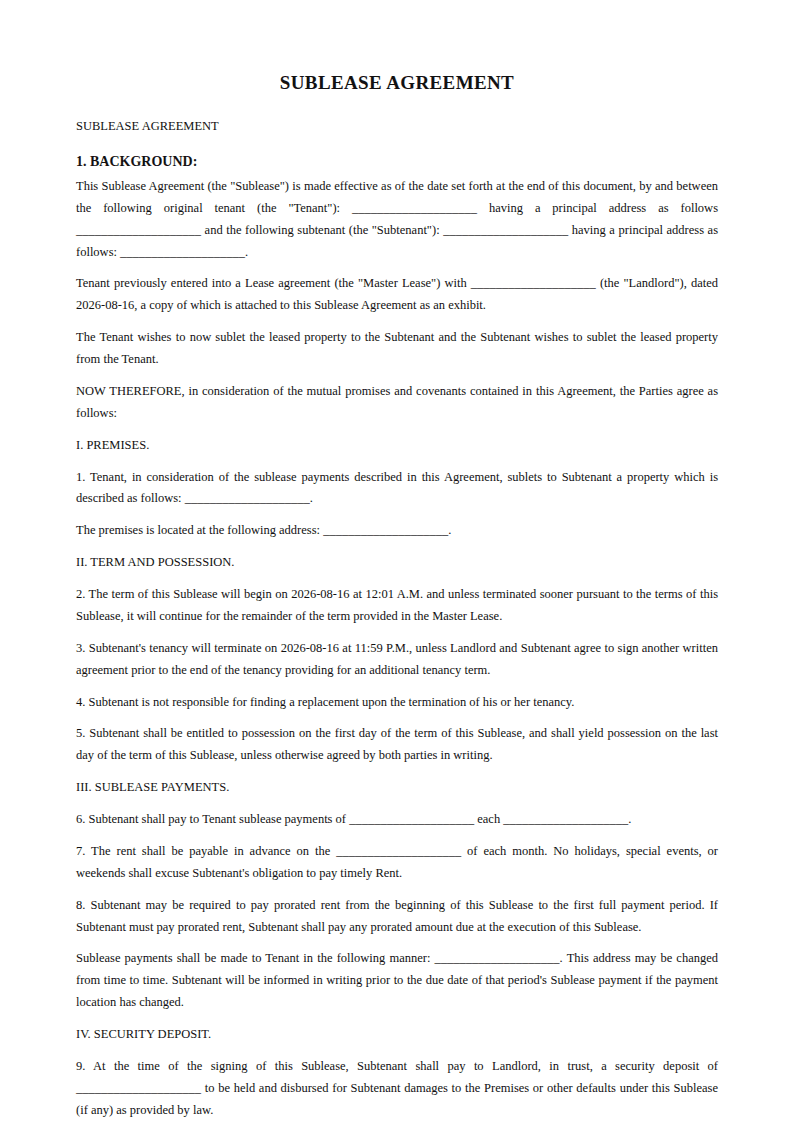
Sublease Agreement
A sublease agreement is a legal contract in which an existing tenant (sublessor) rents out part or all of the leased property to another party (sublessee) for a portion of the original lease term. This arrangement is particularly useful for tenants who need flexibility—perhaps they’re moving temporarily, seeking to share costs, or need to downsize without terminating their primary lease.
What Is a Sublease Agreement?
A sublease agreement is essentially a secondary lease arrangement. While the original lease remains in effect between the landlord and the primary tenant, the sublease allows the primary tenant to transfer some of their occupancy rights to a sublessee. However, the primary tenant typically retains ultimate responsibility to the landlord if the sublessee fails to meet obligations.
Key Elements of a Sublease Agreement
-
Landlord Consent:Most original lease agreements require the primary tenant to obtain written permission from the landlord before entering into a sublease. Failure to do so can result in a breach of the original lease.
-
Parties Involved:Clearly identify the sublessor (original tenant) and the sublessee (new tenant). The document should include their legal names and contact information.
-
Property Description:Provide a detailed description of the property or portion being subleased. This includes the address, unit number, and any specific areas (e.g., parking spaces or storage areas) included in the sublease.
-
Term of Sublease:Specify the sublease duration, which should not exceed the term of the original lease. Clearly state the start and end dates.
-
Rent and Payment Terms:Outline the rent amount payable by the sublessee, the due date, acceptable payment methods, and any security deposit required. This section may also address whether the rent paid to the sublessor differs from the rent collected from the sublessee.
-
Responsibilities and Obligations:Define the maintenance responsibilities, utility payments, and other obligations of both parties. The sublessee must adhere to the same rules as set out in the original lease.
-
Incorporation of Original Lease Terms:To avoid conflicts, reference and attach relevant portions of the original lease that the sublessee is required to follow. This ensures that all terms—such as noise restrictions, pet policies, and common area usage—are clearly understood.
-
Termination and Default:Describe the conditions under which the sublease may be terminated by either party, including default, early termination, or breach of contract. Also, specify remedies if the sublessee fails to comply with the terms.
-
Legal Considerations:Include a clause stating that the sublease agreement is subject to local laws and regulations. Both parties should understand that the primary tenant remains liable to the landlord, regardless of the sublease.
Benefits and Risks of Subleasing
Benefits:
- Flexibility:Allows tenants to temporarily rent out space without terminating their original lease.
- Cost Sharing:Can help reduce rental expenses by offsetting some of the lease costs.
- Utilization of Space:Ensures that a rented space is used efficiently, especially during periods of absence.
Risks:
- Landlord Non-Compliance:Failure to obtain the landlord’s consent may lead to legal disputes or termination of the original lease.
- Sublessee Default:The primary tenant remains responsible if the sublessee fails to pay rent or damages the property.
- Legal Complexity:Navigating the terms of both the original lease and the sublease can be challenging without professional legal advice.
For those seeking a standardized document to get started, the Simple Sublease Agreement Template provides a solid foundation to ensure your rights and responsibilities are clearly outlined.
Frequently Asked Questions (FAQ) on Sublease Agreements
Based on recent queries and common concerns found through recent searches, here are some extensive FAQs on sublease agreements:
1. What is a sublease agreement, and how does it differ from a standard lease?
A sublease agreement is a contract where the original tenant rents out all or part of their leased space to another party, while the primary lease remains in effect between the tenant and the landlord. In a standard lease, the tenant has a direct contractual relationship with the landlord.
2. Do I need the landlord’s permission to sublease my property?
Yes, most lease agreements require written consent from the landlord before a tenant can sublease. Failing to obtain consent can result in a breach of the original lease and potential legal consequences.
3. What key information should be included in a sublease agreement?
A well-drafted sublease should include:
- The identities and contact information of the sublessor and sublessee.
- A detailed description of the subleased property.
- The term (start and end dates) of the sublease.
- Rent amount, payment schedule, and security deposit details.
- Responsibilities for maintenance and utilities.
- Terms regarding termination and default.
- A reference to relevant sections of the original lease.
4. How long can a sublease last?
The sublease term must not exceed the duration of the original lease. Typically, it is set for the remaining term of the primary lease, though short-term subleases are also possible if agreed upon.
5. What happens if the sublessee fails to pay rent?
The original tenant remains ultimately responsible for rent payments to the landlord. If the sublessee defaults, the primary tenant may need to cover the rent and then seek legal recourse against the sublessee if necessary.
6. Can a sublease agreement be modified after it’s signed?
Modifications are possible, but they must be agreed upon by both the sublessor and sublessee. It’s advisable to document any changes in writing and ensure they do not conflict with the original lease terms.
7. Are there any risks involved in subleasing my space?
Yes, risks include:
- The potential for the sublessee to damage the property or default on rent.
- Legal complications if the sublease violates the original lease terms.
- The primary tenant’s continued liability to the landlord, regardless of the sublease.
8. How do I protect myself when drafting a sublease agreement?
Ensure you:
- Obtain written consent from your landlord.
- Draft a detailed sublease agreement that mirrors relevant terms from the original lease.
- Consider consulting a legal professional to review the document.
- Use a trusted template, such as the Simple Sublease Agreement Template, to help cover all necessary aspects.
9. What legal obligations does the sublessee have?
The sublessee must adhere to all terms outlined in both the sublease and the original lease. This includes following property rules, paying rent on time, and maintaining the property in good condition.
10. Is a verbal sublease agreement valid?
While verbal agreements can be legally binding in some jurisdictions, it is highly recommended to have a written sublease agreement. Written contracts reduce misunderstandings and provide clear evidence of the agreed-upon terms.
11. What should I do if I need to terminate the sublease early?
Review the termination clauses in your sublease agreement. If early termination is necessary, communicate promptly with the sublessee and, if needed, negotiate terms that are acceptable to both parties. Ensure that any agreement is documented in writing.
12. Can I sublease part of my leased property, like a single room or storage space?
Yes, subleasing can cover all or part of the leased property, provided the original lease allows it. Make sure the sublease clearly specifies which areas are being rented and any limitations on usage.
13. What if the original lease is terminated while I have an active sublease?
If the original lease is terminated for any reason, the sublease typically terminates as well. The primary tenant must inform the sublessee about the situation and work with the landlord to resolve any outstanding issues.
14. How do disputes between the sublessor and sublessee get resolved?
Dispute resolution procedures should be included in the sublease agreement. These may involve mediation, arbitration, or, if necessary, legal proceedings in the appropriate jurisdiction.
15. Where can I find a reliable template to create a sublease agreement?
For a straightforward and reliable starting point, you can refer to the Simple Sublease Agreement Template. This template provides a structured format to ensure all key elements are covered.