
Share Purchase Agreement in Nigeria
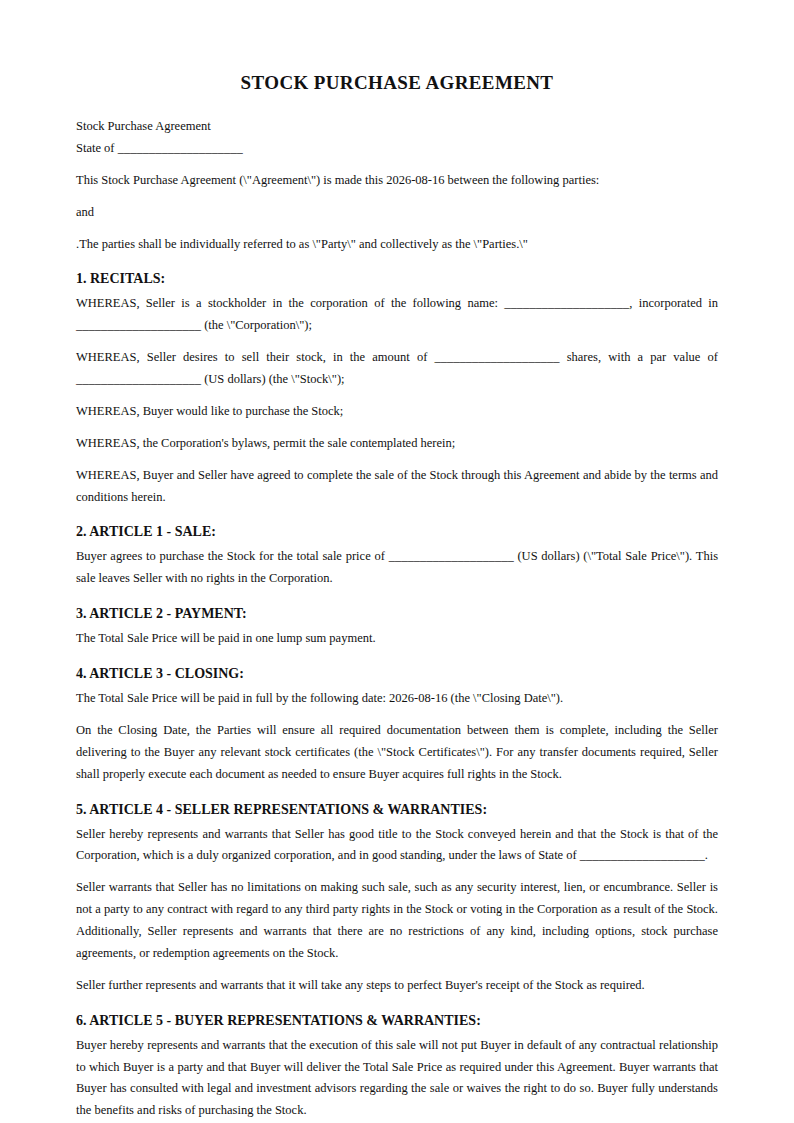
A share purchase agreement transfers ownership of shares in a company from a seller to a buyer. In Nigeria it is also called a stock purchase agreement, and the document is the same thing.
Buying shares is different from buying a business's assets, and the difference matters enormously. Buy the assets and you choose what you take. Buy the shares and you take the whole company as it stands, including every liability, contract, tax exposure and lawsuit attached to it.
Shares or Assets
A buyer usually prefers assets, because it can leave the problems behind. A seller usually prefers shares, because it gets a clean exit rather than being left with an empty company and residual obligations.
Shares can still be the right answer where the company holds licences, contracts or property that cannot easily be transferred, or where continuity matters to customers and staff. A telecoms licence, a distribution agreement with a change of control clause, or a lease with a difficult landlord can all make an asset deal impractical.
Whichever it is, price the risk. A buyer taking shares needs stronger warranties, better due diligence, and usually a retention of part of the price.
What the Agreement Has to Cover
The parties and the shares. Exactly which shares, of what class, as a proportion of the issued share capital, and confirmation that they are fully paid.
The price and how it is paid. Lump sum, instalments, or part deferred. Whether there is an adjustment after completion for working capital or debt.
Conditions to completion. Board and shareholder approvals, waiver of pre-emption rights, third party consents, regulatory clearance where needed.
Completion mechanics. What is handed over on the day, set out below.
Warranties. The seller's statements about the company.
Indemnities. Specific protection for known risks.
Restrictive covenants. Stopping the seller competing or taking the customers.
Governing law. Nigerian law, and where disputes go.
Warranties Are Where the Money Is
Warranties are statements of fact by the seller about the company: that the accounts are accurate, that tax has been paid and filed, that there is no undisclosed litigation, that the company owns its assets, that material contracts are in force and not in breach, that employment terms are as stated, that the intellectual property is owned and unencumbered.
If a warranty turns out to be untrue, the buyer has a claim for the difference in value. This is the buyer's main protection and the seller's main exposure, so it is where negotiation concentrates.
The seller's tools for limiting it are the disclosure letter, which qualifies the warranties by revealing known problems, a financial cap on total liability, a small claims threshold, and a time limit, commonly twelve to twenty four months for general warranties and longer for tax.
A buyer's tool is a retention: part of the price held in escrow for the warranty period, so there is money to claim against rather than a seller who has spent it.
Due Diligence On a Nigerian Company
Before the warranties, do the work. A Corporate Affairs Commission search to confirm the shareholding, the directors, the charges registered against the company and that annual returns are up to date. The company's own register of members, which is the primary record of who owns what, and which is frequently out of date in Nigerian companies.
Then audited accounts and management accounts, tax filings and clearance, employee records and pension remittances, material contracts and their change of control clauses, property title and consents, licences and permits, and any pending litigation.
Two things catch buyers of Nigerian companies repeatedly. Unremitted pension and tax deductions, which are personal exposures as well as company ones. And a share register that does not match what the seller says they own, because a previous transfer was never properly recorded.
Completion, and the Filings Afterwards
Transferring shares in a Nigerian company is a process, not a signature. On completion you need executed instruments of transfer for the shares, the share certificates, a board resolution approving the transfer and the registration, resignations and appointments of directors where relevant, and updated statutory books.
The company must then enter the buyer in its register of members, which is what actually makes them a member, and issue new share certificates. Changes to directors and to the shareholding are notified to the Corporate Affairs Commission.
Two financial items to plan for. The instrument of transfer attracts stamp duty under the Stamp Duties Act, and an unstamped transfer causes problems later. And a disposal of shares can attract capital gains tax where the proceeds exceed the statutory threshold. The thresholds and reliefs in this area were reworked by the tax reform legislation that took effect in 2026, so confirm the current position with a tax adviser before completing rather than relying on an older figure.
Where the target is large, or the transaction affects competition in a market, clearance from the Federal Competition and Consumer Protection Commission may be required, and completing without it is not a risk worth taking.
Frequently Asked Questions About Share Purchase Agreements in Nigeria
Is it better to buy shares or assets? Assets, usually, from a buyer's point of view, because you leave the liabilities behind. Shares can be necessary where licences, contracts or property cannot be transferred, and in that case the buyer needs stronger warranties and a retention.
What filings are needed at the Corporate Affairs Commission? The company records the transfer in its register of members and issues new certificates, and changes to shareholding and directors are notified to the Commission. The transfer instrument also needs stamping under the Stamp Duties Act.
What are warranties and why do they matter so much? They are the seller's statements of fact about the company, and if one is untrue the buyer has a claim. They are the buyer's main protection against problems that due diligence did not find, which is why the cap, the time limit and the disclosure letter are negotiated so hard.
Is there tax on selling shares in a Nigerian company? A share disposal can attract capital gains tax where proceeds exceed the statutory threshold, and stamp duty applies to the transfer instrument. The thresholds and reliefs changed with the 2026 tax reforms, so get the current figures confirmed before you complete.
Do the other shareholders have to agree? Often yes. The articles of a private Nigerian company commonly restrict transfers and give existing members a right of first refusal, so those rights have to be waived or followed before the sale can complete.
Getting Your Share Purchase Agreement Right
Read next: what rights a shareholder actually has and the difference between a shareholder and a nominee. After completion, the shareholders agreement governs how the new group works together.
The parts that decide whether a deal was a good one are the warranties, the limitations on them, the retention, and whether the completion filings were actually done.
Answer a few questions and you will have a share purchase agreement written for Nigerian companies under CAMA 2020, ready to download in Word and PDF.