
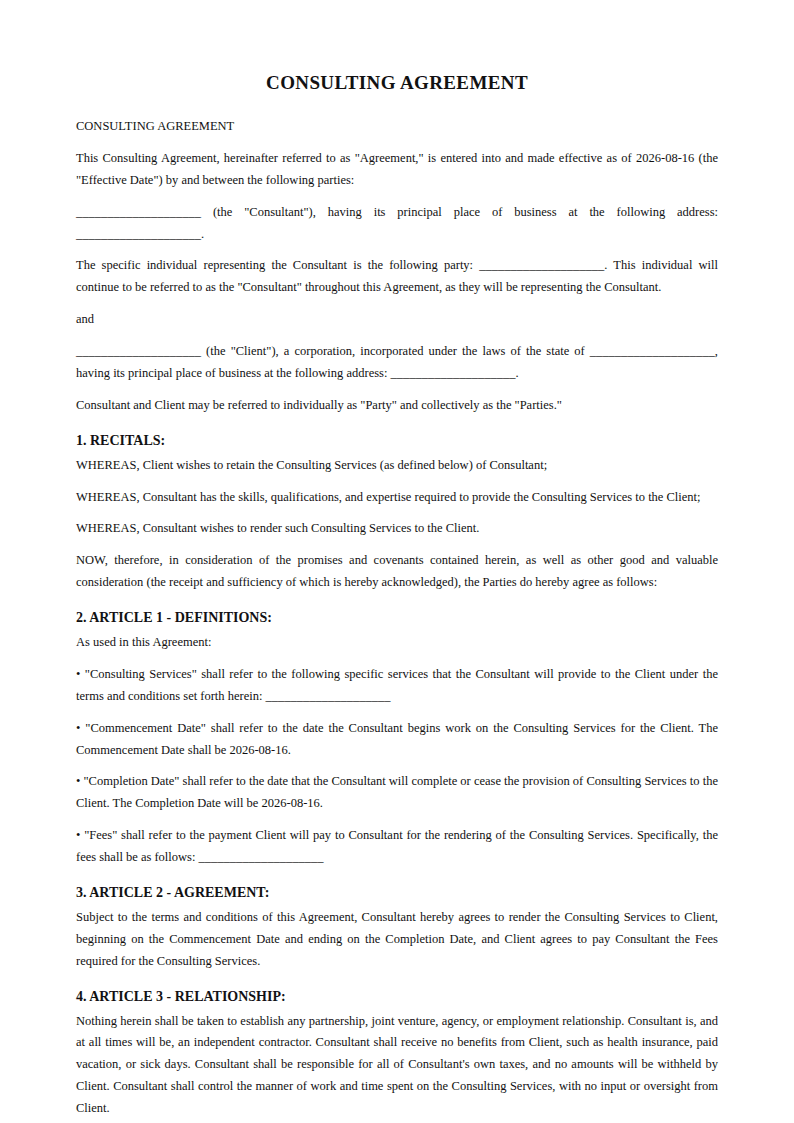
Consulting Agreement
A Consulting (or Consultancy) Agreement is a formal, legally binding contract between a consultant and a client (individual, company, or organization). It clearly states the terms and conditions under which consulting services will be provided. This type of agreement serves as a guide for the business relationship, ensuring that both parties understand their roles, expectations, compensation, and legal rights.
The Need for a Consulting Agreement
Consulting agreements serve several vital purposes:
- Clarity and Communication
A consulting agreement outlines the scope of services, responsibilities, and deliverables for both parties. By clearly defining these aspects, it minimizes misunderstandings and ensures that everyone is on the same page from the start.
A comprehensive agreement protects both the consultant and the client legally. It includes provisions for intellectual property, confidentiality, termination, and dispute resolution—helping to prevent potential legal conflicts.
- Professionalism and Trust
Having a formal document in place enhances professionalism and builds trust. It signals that both parties are serious about the engagement, which can contribute to a more successful partnership.
- Financial Clarity
Consulting agreements clearly state compensation terms, including fees, payment schedules, and reimbursement of expenses. This transparency helps avoid disputes and ensures that the consultant is fairly compensated for their work.
How to Write a Consulting Agreement
Creating a consulting agreement might seem challenging, but breaking it down into key components can make the process manageable. Here’s a step-by-step guide:
- Define the Parties
Begin by clearly identifying the client (the business) and the consultant (the expert). Include full legal names and addresses to ensure clarity.
- Outline the Scope of Services
Describe the specific services to be provided. This section should cover:
- Detailed descriptions of the tasks or projects.
- Milestones and deadlines.
- Deliverables expected at each stage of the engagement.
- Set the Compensation Terms
Clearly state how much the consultant will be paid and when. Consider including:
- The fee structure (hourly, per project, or retainer-based).
- Payment schedules and methods.
- Provisions for expenses, if applicable.
- Define the Duration and Termination Conditions
Specify the start date and duration of the consulting engagement. Additionally, include conditions for early termination, such as breach of contract or changes in business needs.
- Address Confidentiality and Intellectual Property
Protecting sensitive information is critical. Include clauses that:
- Outline the confidentiality obligations of both parties.
- Define who owns the intellectual property generated during the engagement.
- Specify how long confidentiality obligations remain in effect.
- Include Dispute Resolution Provisions
Detail how disputes will be handled if they arise. This might include mediation, arbitration, or litigation procedures. Clear dispute resolution terms help both parties avoid costly legal battles.
- Legal and Compliance Considerations
Ensure the agreement complies with applicable laws. Consider consulting a legal professional to review the document, especially if the engagement involves complex or high-stakes projects.
Benefits of a Well-Drafted Consulting Agreement
- Reduces Ambiguity: Both parties know exactly what is expected, reducing the potential for misunderstandings.
- Fosters Professionalism: A formal agreement signals that the engagement is taken seriously, boosting mutual respect.
- Saves Time and Money: Clear terms can prevent disputes that might otherwise lead to expensive legal battles.
- Strengthens Relationships: When both sides feel protected and valued, the working relationship is more likely to be successful.
Interesting Facts About Consultancy Agreements:
- Common in Specialized Industries: Consultancy agreements are prevalent in industries such as IT, management, marketing, finance, engineering, and healthcare. In these fields, consultants are often hired for their expertise or specific knowledge that the client may not possess in-house.
- Independent Contractor: In most consultancy agreements, the consultant is an independent contractor, not an employee. This means they handle their taxes and benefits, and the client isn't responsible for things like social security or health insurance.
- Flexibility: One of the main appeals of consultancy agreements is flexibility. Consultants typically work on a short-term, project-based, or part-time basis, which allows them to have a wide variety of clients and projects.
- Non-Compete Clauses: In some consulting agreements, especially in competitive industries, a non-compete clause is included. This restricts the consultant from offering similar services to competing businesses for a certain period after the agreement ends.
Whether you’re a consultant or a business, investing in a solid consulting agreement is a wise decision that can pay off in reduced risk, improved performance, and lasting professional partnerships.