
How to Write a Photography Release Form
A release is permission from the person in the photograph to use their image. Copyright covers the picture; this covers the person in it.
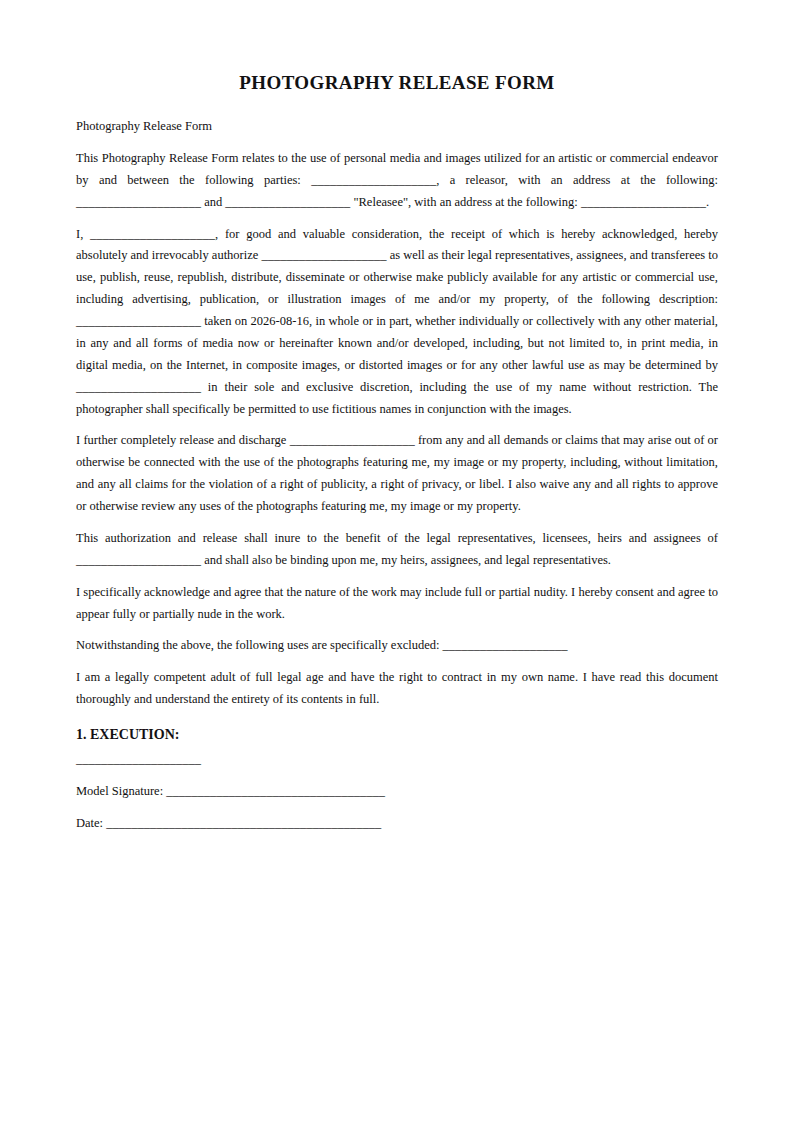
What a photography release form is
A photography release is written permission from the person appearing in a photograph for their image to be used.
It covers a different thing from copyright, and the distinction is worth being clear about. The photographer generally owns the copyright in the image, which controls copying and publishing. The person in the photograph has interests of their own in how their likeness is used, particularly commercially. Owning the picture does not by itself mean you may put somebody's face on a billboard.
In Nigeria this sits at the intersection of privacy and data protection. The Nigeria Data Protection Act 2023 treats personal data broadly, and a recognisable photograph of an identifiable person is personal data. Consent is one of the lawful bases for processing it, and a signed release is what evidences that consent.
So the release protects the photographer and whoever publishes the image, and it gives the subject a record of what they agreed to.
Who needs one
Photographers shooting portraits, events or campaigns where the images will be published or sold.
Businesses using photographs of staff, customers or models in marketing.
Agencies and publishers who need to show they had permission for the images they ran.
Anybody photographing at an event where images will be used commercially afterwards.
Editorial and news photography is treated differently from commercial use, and the position for photographs of children is stricter still: consent comes from a parent or guardian rather than from the child.
Before you start
Decide these before the shoot rather than afterwards.
What the images will actually be used for, since a release for a website is narrower than one covering advertising.
How long the permission lasts.
Whether the subject is being paid, and whether that changes anything.
Whether the subject wants any use excluded.
And whether anybody photographed is under eighteen, in which case a parent or guardian signs.
The walkthrough
Filling in the form, step by step
Every question you will be asked, what it means, and an example of a good answer.
Step 1 of 2
Photography Release Form
The photographer and the subject
The form names two parties and the labels take a moment to untangle.
The releasee is the party receiving the permission, which is the photographer, agency or business that will use the image. The releasor is the person granting it, which is the subject appearing in the photograph.
Name the releasee as the entity that will actually use and publish the images. Where a photographer shoots for a client, consider whether the release should run to the client too, since a release naming only the photographer may not permit the client to publish.
The subject should be named as they appear on their identification, and their address recorded. Where the subject is a child, this is where the parent or guardian signing on their behalf is named, and the relationship should be stated. A release signed by a child is not reliable consent.
- Releasee's Name
- The party receiving permission: the photographer, agency or business that will use the images. Where a photographer shoots for a client, consider naming the client too, since a release running only to the photographer may not permit the client to publish.
- Releasee's Address
- Their address, which identifies the party relying on the release and gives the subject somewhere to write if they later want to withdraw.
- Releasor's Name
- The person appearing in the photograph, named as on their identification. Where the subject is under eighteen, name the parent or guardian signing on their behalf and state the relationship, since a child's own signature is not reliable consent.
- Releasor's Address
- The subject's address. Under data protection law they retain rights over their personal data, and this is where any correspondence about that would go.
Step 2 of 2
Photography Release Form
The images, the date and what is excluded
This step defines the permission, and the description is where its scope is set.
Describe the images and, critically, the uses permitted. A release covering photographs taken at a named event for use on the company website and social media is a defined permission. One covering photographs of the releasor for any purpose is close to unlimited, and a subject signing that has agreed to more than they probably realise.
Use this space to record the things the form does not separately ask: the territory, the duration, whether the images may be edited or cropped, and whether they may be licensed on to third parties. Each of those is a real question, and silence on them favours whoever is relying on the release.
The date of the shoot ties the release to specific images. A release should not float free of the session it relates to, since an undated permission covering unspecified photographs is exactly the kind of consent that fails when it matters.
The exclusion clause is the subject's protection. It is where they carve out uses they are not comfortable with: no political advertising, no use implying endorsement of a product, no editing that materially alters the image. A subject with reservations should use it rather than relying on goodwill.
- Description
- The images and the uses permitted. A release for photographs from a named event for a company website is a defined permission; one covering any photographs for any purpose is close to unlimited. Use this space also to state the territory, how long the permission lasts, whether images may be edited, and whether they may be licensed on to third parties.
- Date the Image or Content was taken?
- When the images were taken. It ties the release to a specific session, and an undated permission covering unspecified photographs is exactly the kind of consent that fails when it is examined.
- Exclusion clause
- Uses the subject does not permit, for example no political advertising, no use implying endorsement, or no editing that materially alters the image. This is the subject's protection, and somebody with reservations should use it rather than relying on goodwill.
Ready to make yours?
Answer those questions in the builder and download a finished photography release form in Word and PDF.
Start now, ₦5,000After you download it
Get it signed before publishing
A release obtained after images have run does not retrospectively authorise the use that already happened.
A parent signs for a child
Photographs of anybody under eighteen need consent from a parent or guardian. A child's own signature is not reliable consent.
Keep releases with the images
File them together, named so they can be matched. A release nobody can connect to a specific shoot is difficult to rely on years later.
Respect a withdrawal of consent
Under Nigerian data protection law a subject retains rights over their personal data. Where somebody asks for an image to be withdrawn, take it seriously.
Questions people ask
What is a photography release?
Written permission from the person appearing in a photograph for their image to be used. It covers the subject's interests, which is separate from the photographer's copyright in the picture.
Does owning the copyright mean I can use somebody's image?
Not for every purpose. Copyright controls copying and publishing the picture. Using somebody's likeness commercially engages their own interests, which is what the release addresses.
Do I need a release for editorial photography?
Editorial and news use is treated differently from commercial use. Where images will advertise or promote something, a release is what protects you.
Who signs for a child?
A parent or guardian. Photographs of anybody under eighteen need consent from an adult with responsibility for them, and the child's own signature is not reliable.
How does data protection affect this?
A recognisable photograph of an identifiable person is personal data under the Nigeria Data Protection Act 2023. Consent is one lawful basis for using it, and a signed release evidences that consent.
Can a subject withdraw consent later?
They retain rights over their personal data, so a withdrawal request should be taken seriously. What the release permits and how long it runs should be stated at the outset.
Documents that go with this
Terms used on this page
Copyright
Copyright is the automatic right you get over original work you create, such as writing, music, film, photographs and software. It protects the expression, not the underlying idea.
Data Protection
Data protection is the law governing how you collect, store and use other people's personal information. In Nigeria it is the Nigeria Data Protection Act 2023, and it applies to far smaller businesses than most owners assume.
Intellectual Property
Intellectual property is the legal ownership of things you create rather than things you can touch, including trademarks, copyright, patents and designs. In Nigeria each type has its own registry and its own rules.
Licensing
Licensing is permission to use something you own without giving it away. The owner keeps the asset, the licensee gets defined rights for a defined period, and money usually flows as a royalty or a fee.
Infringement
Infringement is using somebody's intellectual property without permission. What you have to prove, and what you can recover, depends on which right was infringed.
Work for Hire
Work for hire is the question of who owns something created by somebody you paid. For employees the answer usually favours the employer. For freelancers it usually does not.
Moral Rights
Moral rights are an author's personal rights in their work: to be credited as its creator, and to object to it being treated in a way that damages their reputation. They stay with the author even after the copyright is sold.
Know Your Customer
Know Your Customer, or KYC, is the set of checks a financial institution must run to confirm who you are before it does business with you. It is why a bank asks for a BVN, a utility bill and a photograph.
Read more on this
NDPA 2023: Why Every Nigerian Website — Even Your Instagram Shop — Now Needs a Privacy Policy
The Nigeria Data Protection Act 2023 (NDPA) is not theoretical. It is being enforced. And if you run any business that collects personal data from Nigerians...
What Is a Privacy Policy? Guide and Template
What Is a Privacy Policy? What It Does and the Legal Requirement for One In today’s digital economy, businesses collect more personal information than ever before. Every time a customer fills out a form, signs up for a n…
10 Legal Documents Every Startup in Nigeria Needs
10 Legal Documents Every Startup in Nigeria Needs Starting a business in Nigeria is exciting. Entrepreneurs launch new ventures every day—technology startups, creative agencies, e-commerce platforms, consulting firms, an…
Step by step guides for every document on LegalDoc
Browse all guides