
Letter of Intent in Nigeria: Agreeing in Principle Without Agreeing by Accident
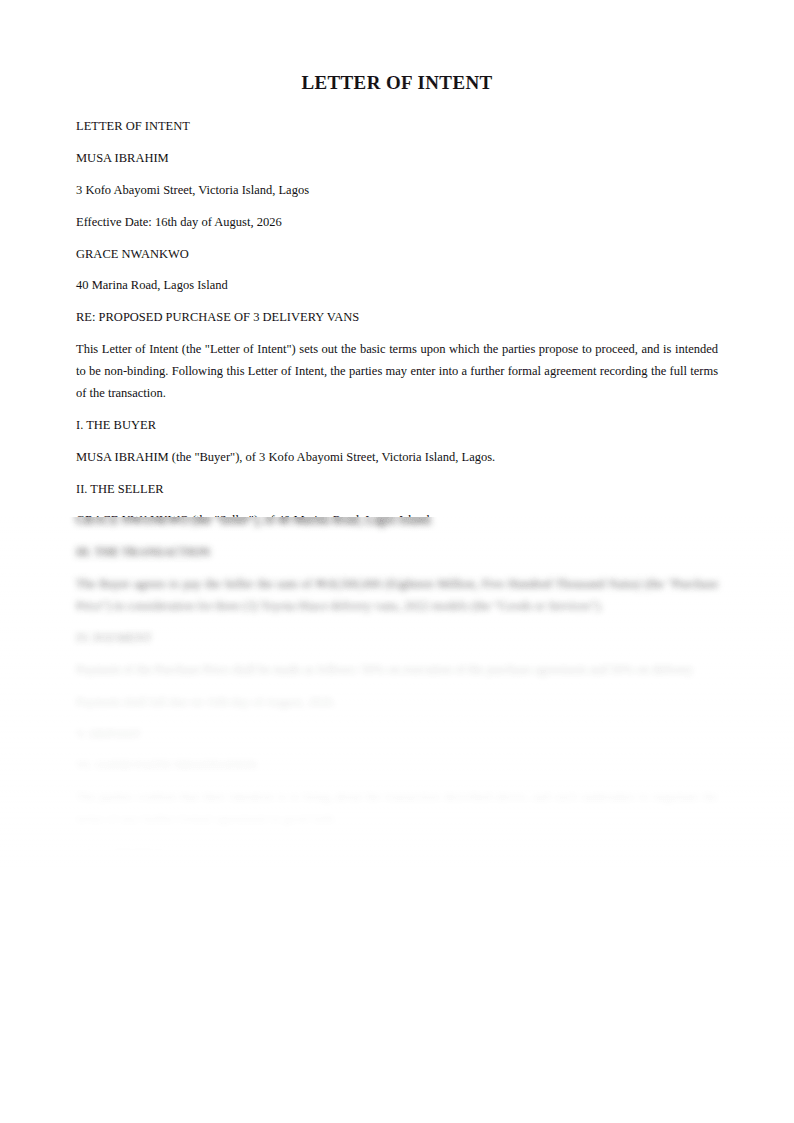
A letter of intent records what two parties have agreed in outline before the full contract is drafted. It sets out the shape of the deal: what is being bought or done, roughly on what terms, and what each side will do next.
Its usefulness is also its danger. A document written to be non-binding can turn out to bind you, and the difference usually comes down to a single clause people leave out.
When a Letter of Intent Earns Its Place
Use one where the deal is big enough that both sides need to commit time and money to due diligence before signing, and neither wants to do that while the other is still shopping around.
Common uses in Nigeria: buying a business or a stake in one, a significant property purchase, a distribution or supply arrangement, a joint venture, or a large construction or services contract going out to a single provider.
For a straightforward sale of goods or a short services engagement, skip it and write the contract. A letter of intent adds a step, and steps cost time.
Binding and Non-Binding: the Part That Matters
Most of a letter of intent is meant to be non-binding. Some of it is usually meant to bind. Saying which is which is the whole job.
Typically non-binding: the price, the structure, the timetable, the scope. These are subject to contract and to due diligence.
Typically binding: confidentiality, exclusivity, who pays their own costs, governing law, and how the letter itself can be terminated.
Write a clause that says exactly this. Name the paragraphs that bind and state that the remainder is not intended to create legal relations and is subject to a formal agreement. Without it, a court looks at the words and the conduct of the parties, and a document that reads like an agreement can be held to be one.
The Clauses Worth Getting Right
The parties and the transaction. Identified properly, with the correct registered names for companies.
Headline commercial terms. Price or price mechanism, what is included, timing.
Conditions. What has to be true before anybody signs: satisfactory due diligence, board approval, regulatory consent, finance.
Exclusivity. If you want the other side to stop talking to competitors, say so, for a defined period. This clause is the main reason buyers ask for a letter of intent at all.
Confidentiality. Binding, and surviving the letter. You are about to share figures.
Costs. Each side bears its own, unless you agree otherwise.
Timetable. When you expect to sign, and what happens if you do not.
Governing law. Nigerian law, and which state's courts.
Exclusivity Is the Clause With Teeth
If the letter binds anything, it usually binds this. A seller who agrees not to negotiate with anybody else for sixty days and then does so has breached a binding obligation, whatever the rest of the letter says about being non-binding.
Keep the period realistic. Thirty to ninety days is common. Long exclusivity with no deadline to sign is a poor bargain for a seller, because it takes the business off the market while the buyer takes its time.
Due Diligence and What Comes Next
The letter should say what access the buyer gets and over what period: documents, premises, people. In Nigeria it is worth being explicit about corporate records at the Corporate Affairs Commission, title documents and consents where land is involved, and tax clearance.
Then the real contract. A letter of intent is a step towards a share purchase agreement, a deed of assignment, a supply agreement or whatever the deal requires. It is not a substitute for one, and it should say so.
Frequently Asked Questions About Letters of Intent in Nigeria
Is a letter of intent legally binding? Partly, and that is the point of drafting it carefully. The commercial terms are usually expressed as non-binding and subject to contract, while confidentiality, exclusivity and costs are usually binding. If the letter does not say which is which, a court will decide from the wording and the parties' conduct.
What is the difference between a letter of intent and a memorandum of understanding? In practice very little. Both record an agreement in principle. What matters is not the label at the top but whether the document states clearly which parts are intended to bind.
Can I walk away after signing one? From the non-binding parts, generally yes, subject to any obligation to negotiate in good faith. You cannot walk away from the binding parts, and breaching an exclusivity clause is the usual way parties get sued on a letter of intent.
Should it be stamped? Where it creates binding obligations it is prudent to stamp it under the Stamp Duties Act, as with other agreements, so that it can be tendered in evidence without objection.
Do both parties have to sign? Yes, if you want the binding parts to bind both of them. A letter signed by one side is an offer, not an agreement.
Getting Your Letter of Intent Right
Read next: what every partner should know about a joint venture. Buying property rather than a business? Use the property purchase version.
The letters that cause trouble are the ones that read like contracts and never say whether they are. The ones that work separate the two clearly on the first page.
Answer a few questions and you will have a letter of intent written for Nigerian use, with the binding and non-binding parts stated plainly, ready to download in Word and PDF.