
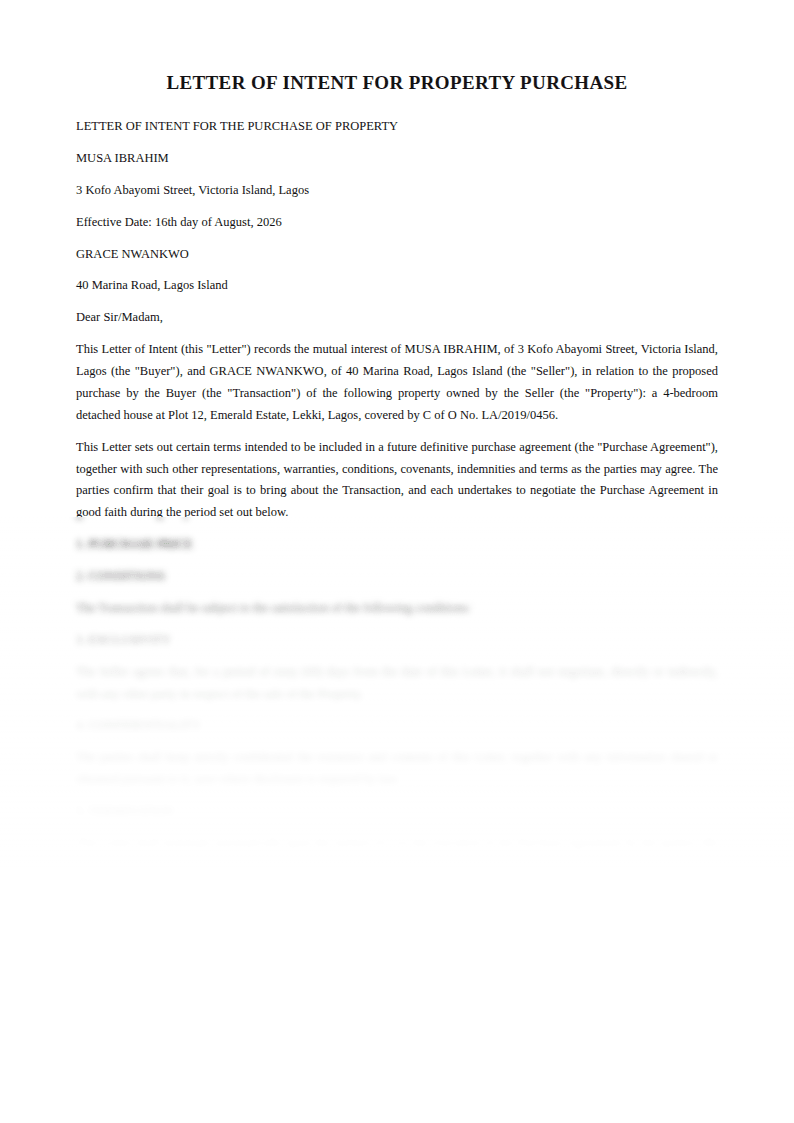
Letter of Intent for a Property Purchase in Nigeria
A letter of intent for property records that a buyer and a seller have agreed the outline of a sale: which property, at what price, on what timetable, and subject to what checks. It comes before the deed of assignment, not instead of it.
In Nigerian property transactions it does one job better than anything else. It takes the property off the market while the buyer does the searches that will tell them whether the seller can actually sell it.
Why It Matters More With Land
Nigerian land transactions carry risks that do not arise in most other purchases. Title may be unregistered. The person offering the land may be an agent, a family member, or one of several beneficiaries who cannot sell alone. Governor's consent under the Land Use Act may never have been obtained on a previous transfer, leaving a defect in the chain.
All of that takes weeks to check. A letter of intent gives the buyer a defined period to check it, and gives the seller certainty that the buyer is serious, usually evidenced by a deposit.
What Goes In It
The parties. Full names, and confirmation of the capacity in which the seller is selling: personally, as an administrator, as an attorney, or on behalf of a family.
The property. Address, size, survey plan number, and the title document being relied on, whether a certificate of occupancy, a registered deed or a government allocation.
The price. Total, and how it breaks down.
The deposit. Amount, when paid, who holds it, and on what terms it is refundable. This is the clause buyers regret leaving vague.
Exclusivity. That the seller will not offer the property to anybody else for a stated period.
Conditions. Satisfactory search at the Lands Registry, satisfactory survey, sight of the title documents, and any consents required.
Timetable. When searches complete, when the deed is executed, when the balance is paid.
Costs. Who pays for the search, the survey, the stamp duty, the registration and the consent fees. In Nigeria these are substantial and should never be left to assumption.
The Deposit Clause
Say plainly whether the deposit is refundable, and in what circumstances. The three common positions are: fully refundable if searches reveal a title defect, forfeited if the buyer simply changes their mind, and refundable in full if the seller withdraws.
Say who holds it. A deposit held by the seller's lawyer in a client account is safer for the buyer than one paid directly to the seller, and the letter should name the account.
A deposit paid with nothing in writing about its return is money the buyer may not see again, and this is the single most common loss in Nigerian property transactions that fall through.
The Searches This Buys Time For
A search at the Lands Registry of the state, to confirm what is registered against the title and in whose name.
A survey check to confirm the land is where the seller says it is, is the size stated, and is not under government acquisition.
Confirmation of consent. Under the Land Use Act, a transfer of a right of occupancy requires the Governor's consent. A chain where consent was never obtained on an earlier transfer is a defect the buyer inherits.
Confirmation of authority to sell. For family land, that the right family members have consented. For an estate, that there is a grant of probate or letters of administration. For a company, that the sale is properly authorised.
What This Document Is Not
It is not a transfer. Title passes by a properly executed deed of assignment, stamped and registered, with consent obtained where required. A letter of intent, a receipt and a survey plan are not ownership, however much money has changed hands.
It is also not a power of attorney. If somebody offers you an irrevocable power of attorney in place of a deed of assignment, that is a warning rather than a shortcut.
Frequently Asked Questions About Property Letters of Intent in Nigeria
Is a letter of intent enough to reserve a property? It reserves it contractually if the exclusivity clause is expressed as binding and both parties sign. It does not transfer any interest in the land. That requires a deed of assignment.
Is my deposit refundable? Only on the terms the letter states. Set out plainly when it comes back, when it is forfeited, and who holds it in the meantime. A deposit paid without those terms in writing is the most common loss in a failed Nigerian property deal.
What searches should I do before signing the deed? A Lands Registry search in the state where the land lies, a survey check against the survey plan, confirmation that the Governor's consent was obtained on earlier transfers, and confirmation that whoever is selling has authority to sell.
Who pays the stamp duty and registration fees? Whoever the letter says. By convention the buyer usually bears them, but they are significant amounts and should be stated rather than assumed.
Do I still need a deed of assignment afterwards? Yes. The letter of intent records the agreement to sell. The deed transfers the interest, and it must be stamped, consented to under the Land Use Act and registered to protect you.
Getting Your Property Letter of Intent Right
Read next: title perfection from search to registered title and why the Governor's consent matters. When you are ready to transfer, the deed of assignment is the document that does it.
A good letter of intent buys you the time to find out whether the seller can sell, and makes clear what happens to your deposit if they cannot.
Answer a few questions and you will have one written for Nigerian property use, covering the deposit terms, the exclusivity period and the searches to be completed, ready to download in Word and PDF.