

Buying or selling a car? Put the sale in writing
Vehicle details, VIN, price and the seller’s promises about ownership, loans and damage, signed by both of you.
Draft a bill of saleThe car looks perfect. Clean interior, low mileage, a price that is just about within budget. The seller is friendly and in a bit of a hurry, because somebody else is coming to see it this afternoon.
Most bad car purchases in Nigeria are not about the engine. They are about the papers. A car with fake customs documents can be seized by Customs months after you buy it. A stolen car can be taken back by its real owner. A car still being paid off can be repossessed by the finance company. In each case, you lose the car, and getting your money back from a seller who has disappeared is another fight entirely.
The good news is that almost all of this can be checked before you pay. It just takes a day longer than the seller would like.
The short answer
Before you pay, see the proof of ownership in the seller's name, the current vehicle licence and insurance, and for an imported car, the customs papers, verified with the Nigeria Customs Service. Check that the VIN and engine number on the car match the documents, and that the car is not stolen or still under a loan. Have a mechanic inspect it. Then sign a written bill of sale with the seller's promises in it, pay by traceable transfer to an account in the seller's name, and register the change of ownership.
The papers to see before you pay
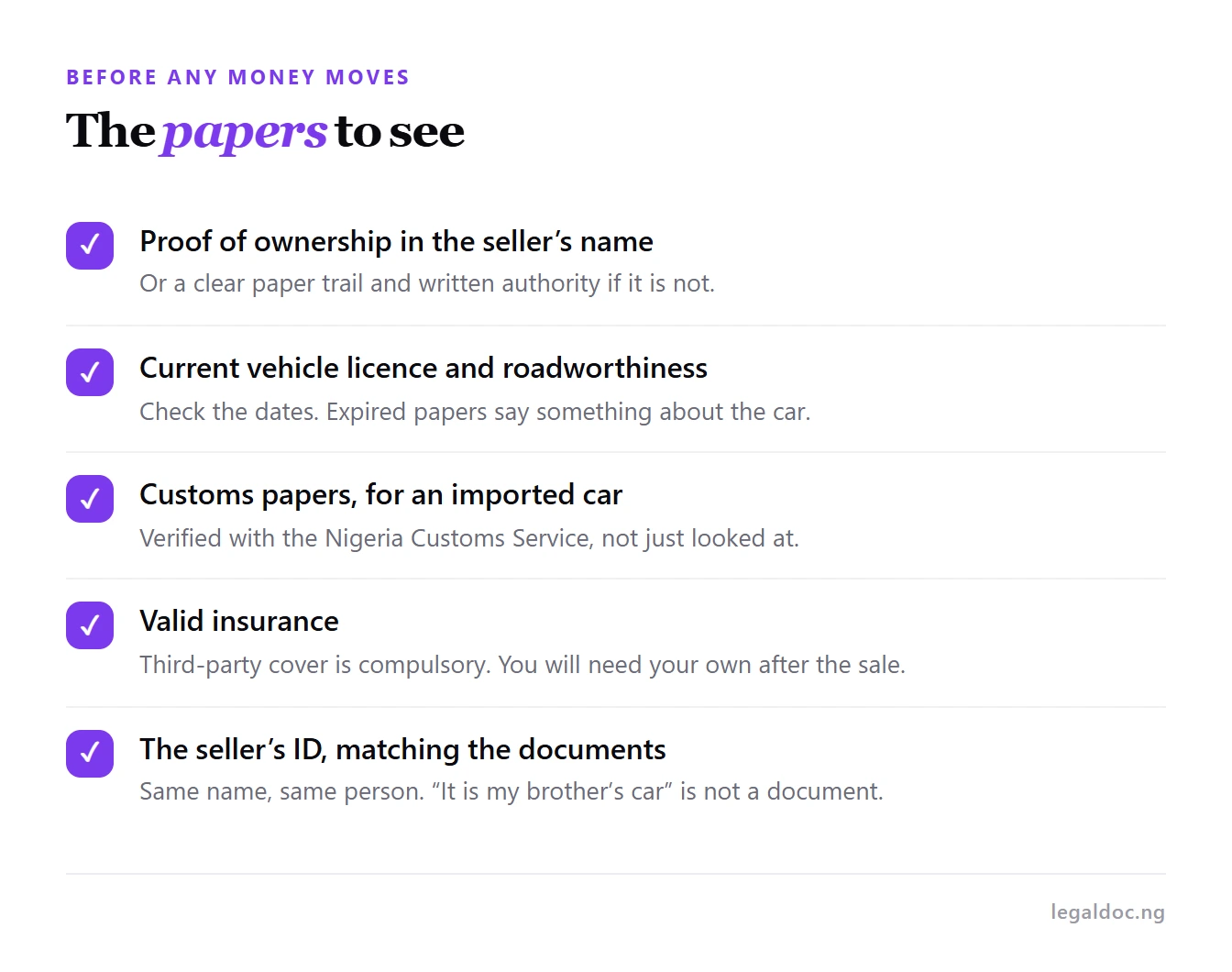
Originals, not photos on WhatsApp. And the names must match.
The common thread is simple: every document should point to the same car and the same owner. The VIN, the engine number, the make, model and colour on the papers should match the car in front of you, and the owner's name should match the person selling it, or come with a clear paper trail explaining why it does not.
If the seller is selling on behalf of somebody else, ask to see that person's written authority, ideally a power of attorney, and their identification. "It is my brother's car" is not a document.
Customs papers: the check people skip
For an imported car, the customs papers show that import duty was paid. This is where many of the worst stories start, because forged customs papers are common and look convincing.
If the duty was never actually paid, the car is liable to seizure by the Nigeria Customs Service, and that can happen in the hands of a buyer who knew nothing about it. The fact that you paid full price in good faith does not stop Customs taking the car.
So do not rely on the papers looking right. Verify them with the Nigeria Customs Service before you pay, and walk away from any seller who resists the idea.
Stolen, financed or not theirs to sell
Under the Sale of Goods Act, which applies across most of Nigeria, a seller who does not own the goods generally cannot give you ownership of them. If the car was stolen, the true owner can reclaim it from you, however innocent you were. Your claim is against the person who sold it to you, if you can find them.
Three checks reduce the risk:
- Match the identifiers. The VIN on the chassis, the dashboard and the papers should all agree, and the engine number should match too. Ground-off, re-stamped or mismatched numbers are a reason to leave.
- Ask the police. You can ask the police to check whether the vehicle has been reported stolen before you buy.
- Ask about finance. A car bought on hire purchase or a vehicle loan may still belong to the finance company until the last instalment is paid. Ask directly, and get the answer in writing. If there is a loan, it must be cleared, with a release from the lender, before or at the moment you pay.
For a car imported from the US or Canada, a history report on the VIN can also show accidents, flood damage, salvage titles and recorded mileage, which helps you catch a car that has been rebuilt or had its odometer wound back.
Dealer or private seller?
Who you buy from changes what the law promises you.
About to buy a car? Ask what to check in the papers
Describe the car and the documents the seller has shown you, and LegalDoc+ tells you what is missing.
Ask LegalDoc+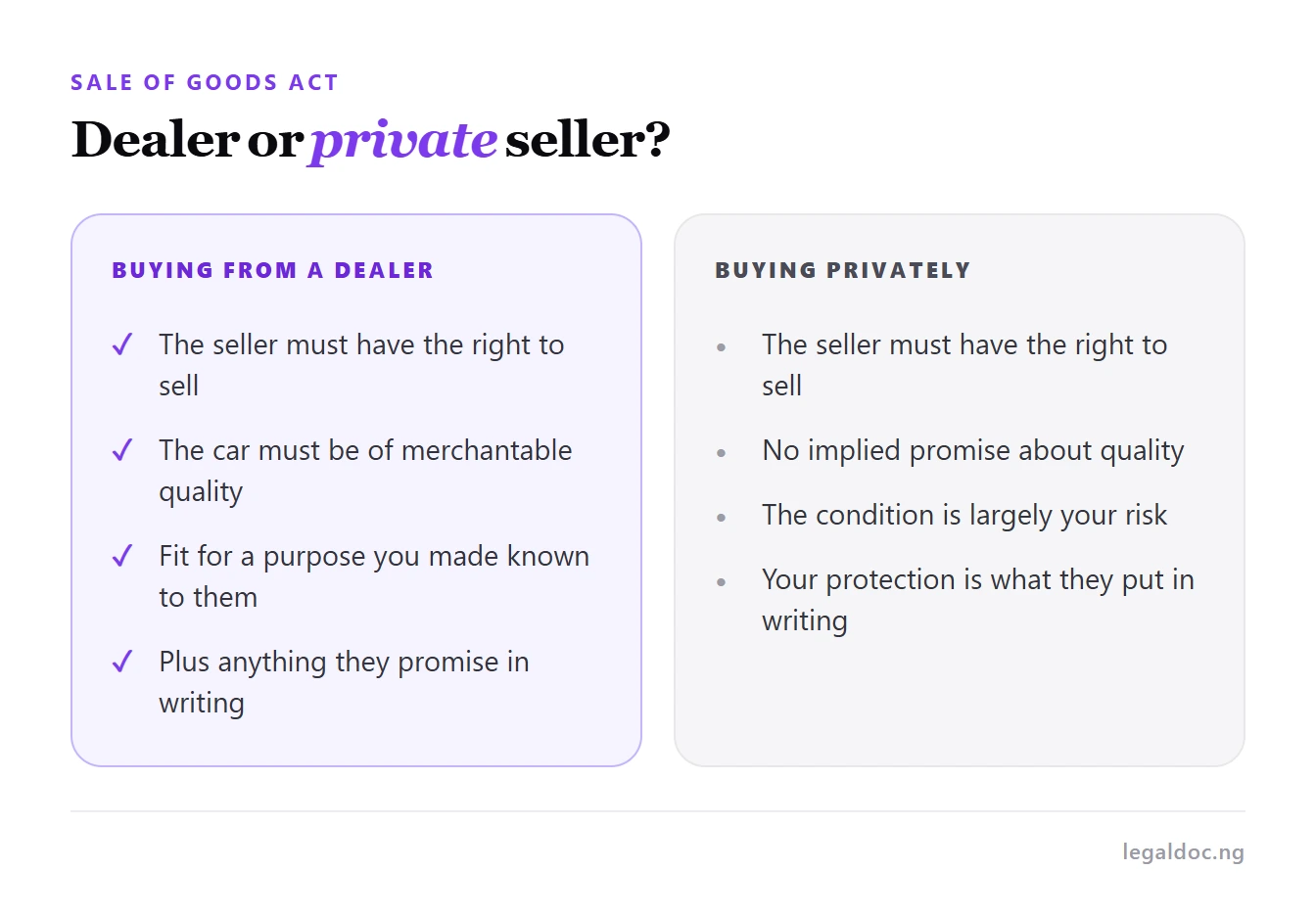
A private sale is mostly "as seen". What the seller puts in writing is your protection.
When you buy from a dealer, somebody selling cars in the course of business, the Sale of Goods Act implies that the car will be of merchantable quality, and fit for any particular purpose you made known. A car that breaks down in the first week with a fault the dealer must have known about can give you a claim.
Buy from a private seller and those quality promises do not apply. The law still implies that the seller has the right to sell, but the condition of the car is your risk. That is why an independent mechanic's inspection matters most in a private sale, and why anything the seller tells you about the car should be written into the bill of sale.
The purchase, step by step
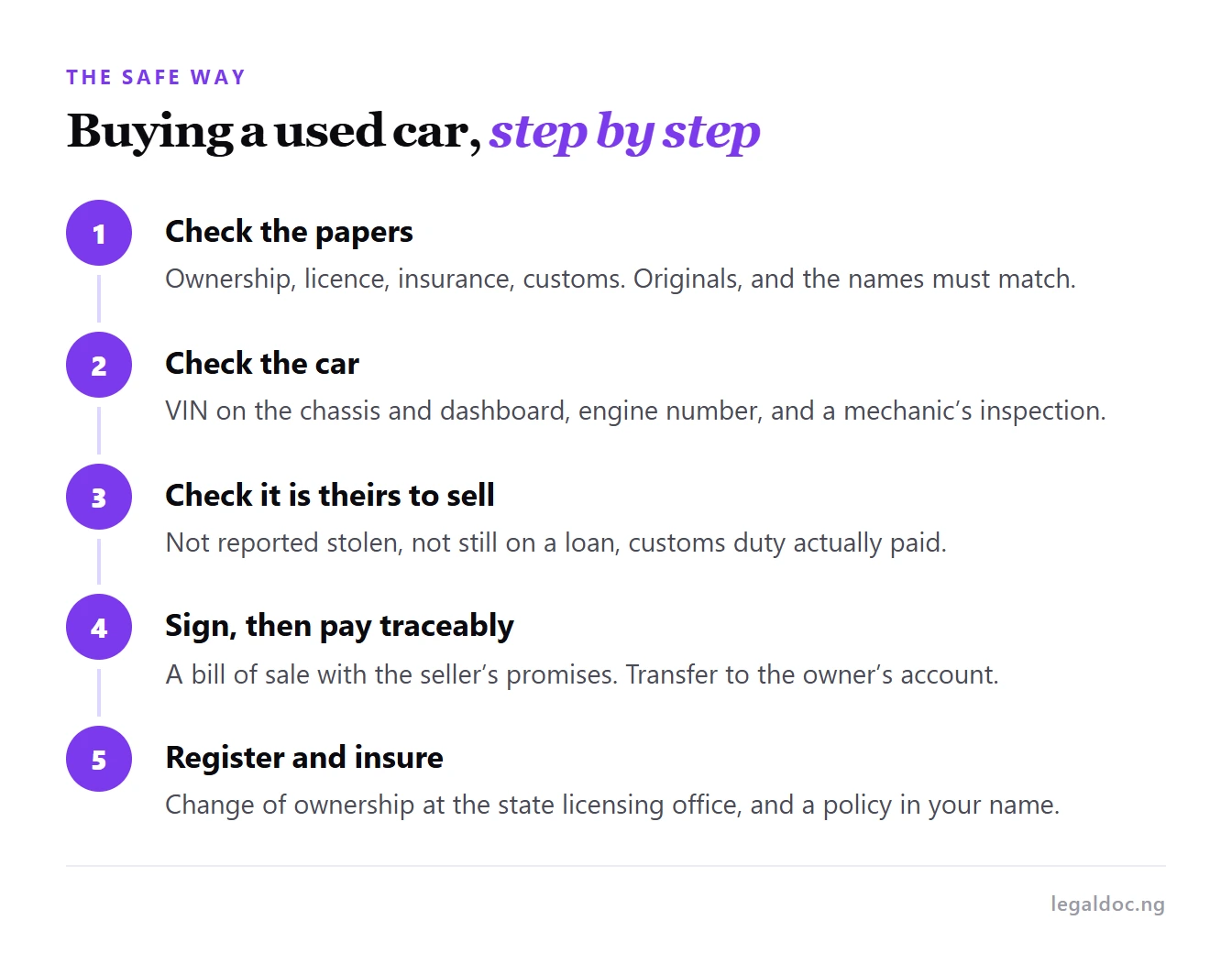
Do not let the "another buyer is coming" line rush you past step three.
The bill of sale
A bill of sale is the written record that the car was sold, by whom, to whom, for how much and on what terms. Most Nigerian car sales still happen on a handshake and a handwritten receipt. That is fine until something goes wrong, at which point it is very little help.
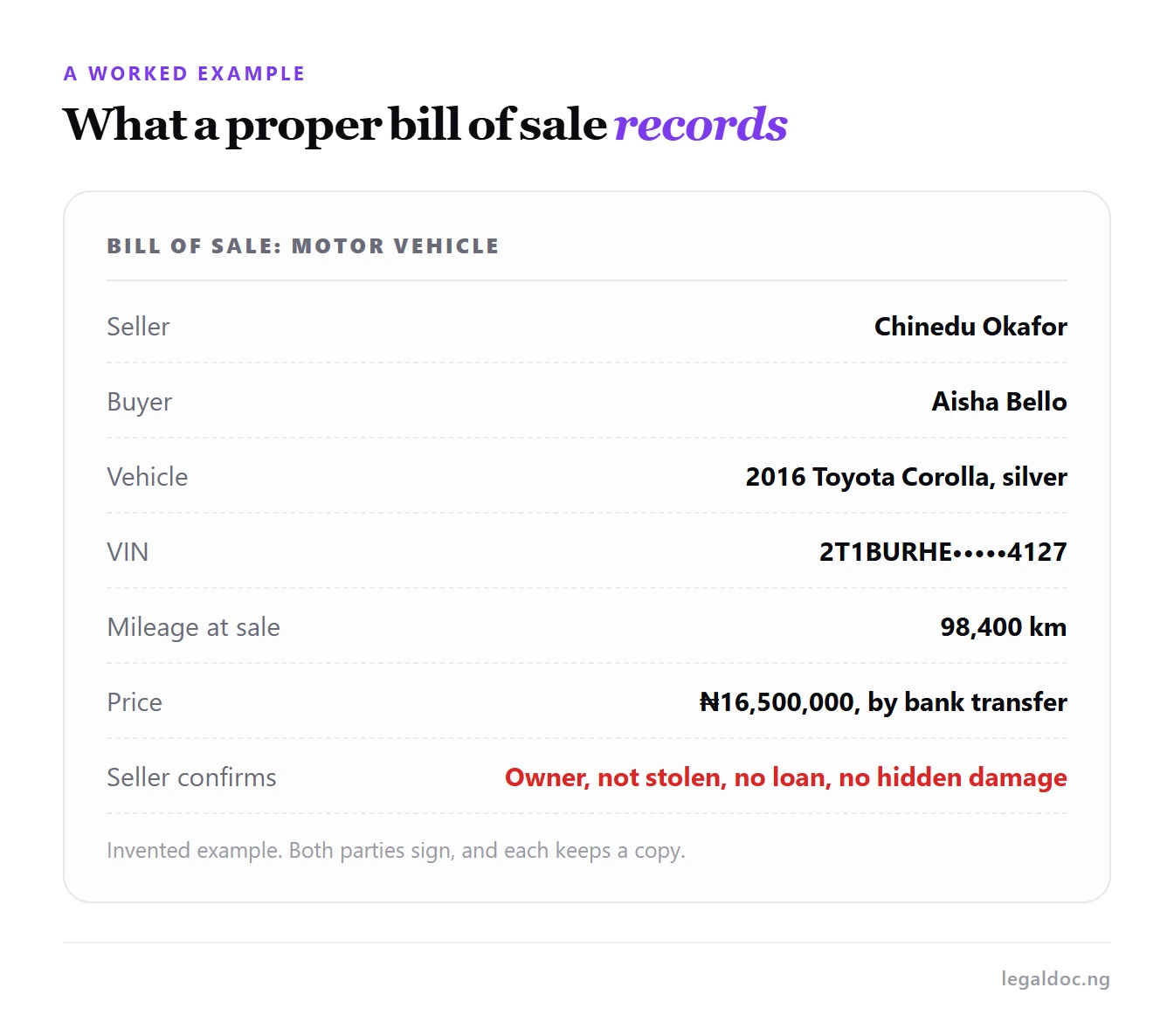
An invented example. The seller's promises at the bottom are the part that protects you.
The details matter, but the part that does the most work is the seller's confirmation: that they own the car, that it is not stolen, that there is no outstanding loan on it, that the mileage is genuine and that there is no accident damage they have not told you about. If any of those turns out to be false, you have a written statement to rely on, rather than your memory of a conversation in a car park.
Our bill of sale for a car covers all of this, and the seller and buyer should each keep a signed copy.
Paying safely
Pay by bank transfer to an account in the name of the registered owner. A transfer creates a record of who received your money. Cash handed to a middleman creates nothing.
Never pay a deposit to hold a car you have not seen, to a seller you have only met online. A large share of used-car scams are adverts for cars that do not exist, or that belong to somebody else entirely.
After you pay
Change of ownership. Take the bill of sale and the seller's documents to your state's vehicle licensing authority and register the change of ownership, so the proof of ownership is in your name. Until you do, the car is still on record as the seller's, which is a problem for both of you.
Insurance. Third-party motor insurance is compulsory in Nigeria. Get a policy in your own name before you drive away, and check that it appears on the Nigerian Insurance Industry Database, where insurance can be verified.
Keep everything. The bill of sale, the transfer receipt, copies of the seller's ID and every document they handed over. If the car's history is ever questioned, that file is your defence.
Frequently Asked Questions About Buying a Used Car in Nigeria
What documents should I get when buying a used car in Nigeria? The proof of ownership in the seller's name, the current vehicle licence and roadworthiness certificate, valid insurance, and for an imported car, the customs papers. Make sure the VIN and engine number on the documents match the car.
How do I know if a car's customs papers are genuine? Verify them with the Nigeria Customs Service before you pay. A car whose duty was never paid can be seized from a buyer who knew nothing about it.
What happens if I buy a stolen car? Generally a seller who does not own the car cannot pass ownership to you, so the true owner can recover it. Your claim is against the seller, which is why a written bill of sale and a traceable payment matter.
Does a private seller have to guarantee the car's condition? No. The implied promises about quality apply when you buy from somebody selling in the course of business. A private sale is largely as seen, so get an inspection and put the seller's statements in writing.
Do I need a bill of sale to buy a car in Nigeria? It is not always demanded, but you should have one. It records the sale and the seller's promises, and it supports the change of ownership.
Where this leaves you
A used car is one of the biggest purchases most people make, and the legal risks are almost all on paper. Check the documents, verify the customs papers, make sure the seller actually owns it, and put the deal in writing before any money moves. The extra day it takes is the cheapest insurance you will ever buy.