
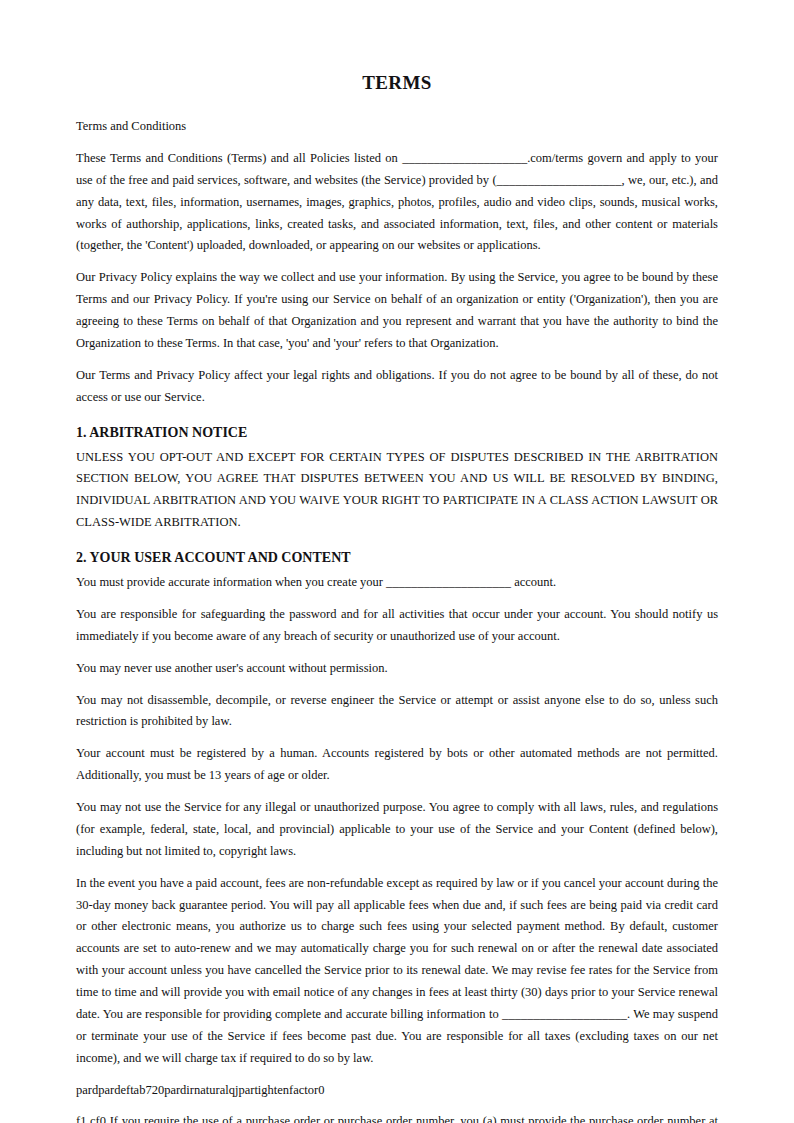
Terms and Conditions for a Nigerian Website or App
Your terms and conditions are the contract between you and everybody who uses your site, buys from your shop or signs up to your app. They decide what you owe a customer, what happens when something goes wrong, and where any argument gets settled.
Most Nigerian businesses treat them as a formality to be copied from somewhere. That is a mistake, because terms are the only document in your business that gets tested by every single customer.
What the Terms Have to Do
Four things, in order of how often they matter.
Describe what you are selling and on what basis: a one-off purchase, a subscription, access to a platform, a service delivered over time.
Set out payment. Price, currency, when payment is due, what happens if a card fails, whether prices include value added tax.
Limit what you are responsible for. Within the bounds the law allows.
Say how a dispute is resolved. Nigerian law, and which courts or which arbitration.
Everything else is useful but secondary.
Clauses Worth Real Attention
Acceptance. How somebody agrees. A tick box at sign up or checkout is far stronger than a link in a footer nobody clicked.
Accounts. Who may open one, what they must keep confidential, when you may suspend it.
Acceptable use. What users may not do, particularly on a platform where they can post or message.
Intellectual property. That your content and brand remain yours, and what licence users get. If users upload content, what licence you get from them.
Third party services. Payment processors, delivery partners, and that their own terms may apply.
Availability. That the service may be interrupted for maintenance, and that you do not promise uninterrupted access.
Termination. How either side ends it, and what survives.
Changes. How you may vary the terms, and how users are told. A clause allowing silent unilateral change of anything is the kind a court dislikes.
The Limits Nigerian Law Puts On You
This is the part that copied foreign terms get wrong. The Federal Competition and Consumer Protection Act 2018 gives Nigerian consumers rights that your terms cannot contract away.
Goods must be of reasonable quality and fit for their purpose. A consumer who receives defective goods is entitled to a remedy, and a clause saying all sales are final does not remove that right. The Act also targets unfair terms generally, and the Federal Competition and Consumer Protection Commission can act against businesses using them.
So limit your liability, but do it honestly. Exclude indirect and consequential loss, cap your liability at what the customer paid, and then add the line that says nothing in the terms excludes liability that cannot lawfully be excluded. That sentence is what keeps the rest of the clause standing.
Digital Products Are Different
If you sell something delivered instantly, a download, a template, a course, an unlock, say so plainly and say what that means for returns. A file delivered to the customer cannot be given back, and the honest position is that there is no returns window for it once delivered.
What you should still commit to is fixing genuine failures: a file that will not open, a download that never arrived, a charge taken twice. Those are not returns, they are you not having delivered, and refusing them is both wrong and bad business.
Governing Law and Where Disputes Go
Say Nigerian law, and name the state whose courts have jurisdiction, usually where your business is based. Without this a dispute starts with an argument about where to have the argument.
Arbitration is worth considering for business customers, under the Arbitration and Mediation Act 2023, because it is private and often faster. For consumer sales it is usually less appropriate, and a clause forcing a small consumer into arbitration is the sort of term that attracts regulatory attention.
Frequently Asked Questions About Terms and Conditions in Nigeria
Are website terms and conditions legally binding in Nigeria? Yes, if the user had proper notice of them and agreed. A tick box at sign up or checkout makes them far easier to enforce than a link in the footer that nobody was asked to read.
Can I limit my liability completely? No. You can exclude indirect and consequential losses and cap your liability at a reasonable figure, but the Federal Competition and Consumer Protection Act 2018 protects consumer rights that terms cannot remove, and a total exclusion is likely to be struck out rather than enforced.
Do I need separate terms for my app and my website? Not usually. One set can cover both if it describes each properly. You will need extra clauses for an app, such as the app store rules and permissions the app requests.
Can I change the terms later? Yes, if the terms say how and you actually follow it. Give notice, and for material changes get fresh agreement rather than relying on a clause that says continued use means acceptance.
Do the terms need to mention VAT? They should say whether displayed prices include value added tax. Leaving it ambiguous causes disputes at checkout and, where you are registered for VAT, creates a problem you do not need.
Getting Your Terms Right
Read next: what to write in your terms and conditions. Selling physical goods? Pair these with a shipping policy and a returns policy.
Terms that work describe your actual business, limit liability within what Nigerian law allows, and are agreed to in a way you can prove.
Answer a few questions about what you sell and how, and you will have terms and conditions drafted for Nigerian use, ready to download in Word and PDF.