
How to Write a Consent to Sublet
A consent to sublet is the landlord's written permission for a tenant to bring in a sub tenant. It protects all three parties and it should come before anybody moves in.
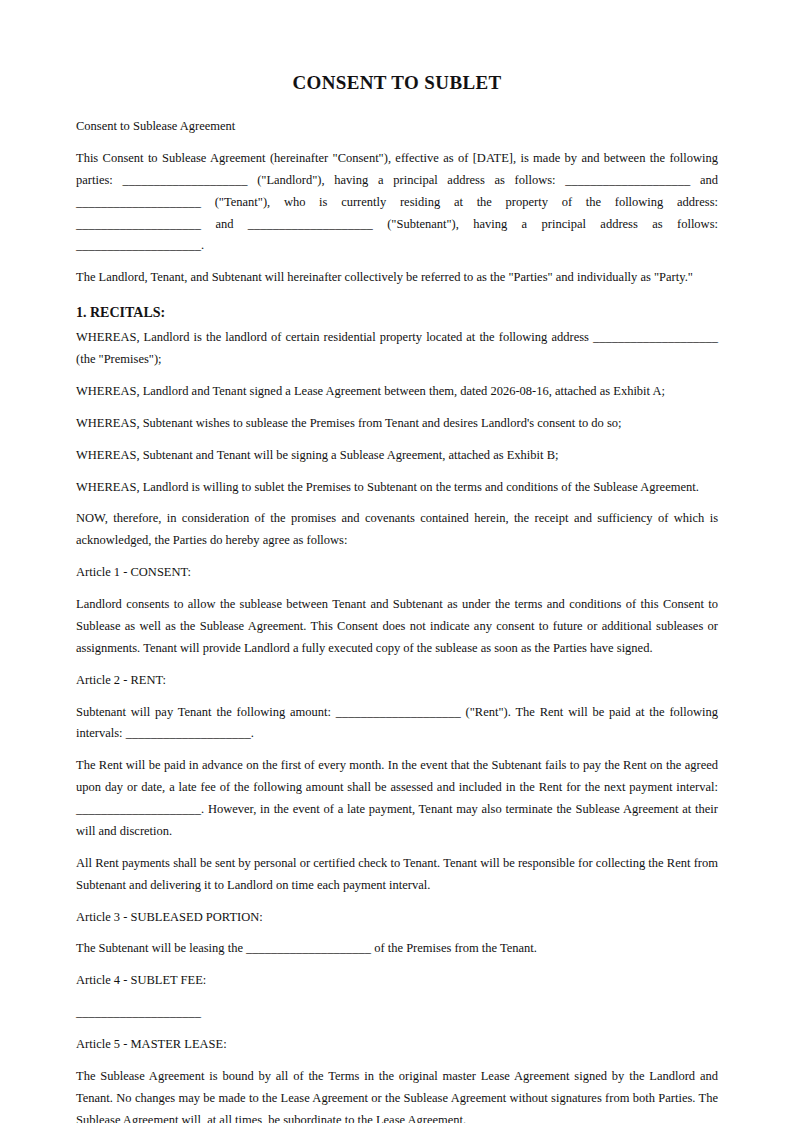
What a consent to sublet is
A consent to sublet is the document in which a landlord agrees that their tenant may sublet.
It exists because most leases forbid subletting without written permission. Without the consent, a tenant who sublets is in breach, and the landlord can act on that breach even if the sub tenant is perfectly satisfactory.
The consent does not replace the sublease. The sublease is the agreement between tenant and sub tenant. The consent is the landlord's permission that makes it lawful under the head lease.
It is also the landlord's opportunity to set conditions, which is why granting consent casually by text message is a missed chance.
Who needs one
Landlords being asked to approve a sub tenant, who want the terms of that approval recorded.
Tenants who need permission and want it in a form that will not be disputed later.
Sub tenants, indirectly, since a sublease granted without consent is a fragile thing to build a home or a business on.
A verbal yes from a landlord is worth very little when the property changes hands or the landlord changes their mind.
Before you start
Landlords should establish a few things before granting consent.
Who the sub tenant is, and whether you would have accepted them as a direct tenant.
What portion is being sublet, and for how long relative to the head lease.
Whether you want a fee for granting consent, and whether the lease permits one.
And whether you want a maintenance deposit, given that somebody you did not choose is about to occupy your property.
The walkthrough
Filling in the form, step by step
Every question you will be asked, what it means, and an example of a good answer.
Step 1 of 3
Consent to Sublet
All three parties named
Consent is a three sided arrangement, and this step identifies everybody in it.
The landlord grants permission. The tenant receives it. The sub tenant is named because the consent is specific to them: permission to sublet to Mr Obi is not permission to sublet to whoever Mr Obi later replaces himself with.
That specificity is the point. A consent that simply permits subletting generally hands the tenant a right to install anybody at all, which is not usually what a landlord intends when they agree to a particular person.
- Landlord's Full name
- The full name of the landlord granting consent, matching the head lease. Where the property is jointly owned, every owner should be named and should consent, since one co owner cannot bind the others.
- Landlord's Address
- The landlord's address for correspondence. Both tenant and sub tenant may need to write here during the sublease, so it should be current.
- Tenant's Full name
- The tenant under the head lease, the person asking for permission. The name must match the head lease exactly, since the consent is granted under that lease.
- Tenant's Address
- The tenant's address for notices. Where they are moving out and the sub tenant is taking over the property, this should be their new address rather than the premises.
- Sub-tenant's Full name
- The specific person permitted to occupy. Naming them keeps the consent tied to this individual, so the tenant cannot treat it as blanket permission to sublet to anybody in future.
- Sub-tenant's Address
- Where the sub tenant currently lives. It identifies them and gives the landlord a record of who is being approved.
Step 2 of 3
Consent to Sublet
The property, the head lease and the money
This step ties the consent to a specific lease and records the financial terms the landlord is approving.
Referencing the head lease by date matters. Consent is granted under a particular lease, and if that lease is later renewed or replaced, fresh consent should be sought rather than assumed to carry over.
The landlord is being asked to approve the sublease rent, the payment date and the late fee. Some landlords are indifferent to these, and some are not: a sublet at a much higher rent than the head rent tells the landlord something about the market and about their own pricing, which is one reason many leases restrict it.
Recording the late fee here keeps the sublease consistent with what the landlord has approved, which avoids the awkward position of the tenant enforcing terms upstairs would not permit.
- Address of the premises
- The property covered by the consent, with unit number, street, area, town and state. It should match the head lease so there is no doubt which premises are being sublet.
- Date of the main lease agreement
- The date of the head lease under which consent is granted. Consent attaches to that lease, so a later renewal or replacement lease should carry its own consent rather than relying on this one.
- How much is the rent (sub-lease rent)
- The rent the sub tenant will pay, with the period it covers. The landlord is approving this figure, and a sublet rent well above the head rent is one reason leases restrict subletting in the first place.
- When should the rent be paid?
- When the sub tenant's rent falls due. Keeping this aligned with the tenant's own obligation upstairs avoids the tenant funding a timing gap out of their own pocket.
- Late fee to be paid in event of a default in payment of rent
- What the sub tenant is charged for paying late. Keep it a genuine estimate of the cost of late payment rather than a penalty, and keep it consistent with what the head lease itself permits.
Step 3 of 3
Consent to Sublet
The portion, the sublet fee and the deposit
The final step records what is being sublet and what the landlord gets for permitting it.
Defining the portion is the practical protection. Consent to sublet one bedroom is not consent to fill the flat, and a landlord who wrote nothing down has agreed to more than they think.
The sublet fee is a commercial question. Some landlords charge for granting consent, some do not, and some leases restrict it. If you are charging, state it here rather than raising it after the sub tenant has moved in.
The maintenance deposit is the answer to the landlord's real concern: somebody they did not select is about to live in their property. A sum held against damage, with the conditions for its return stated, addresses that without blocking the arrangement.
- Describe the portion of the premises to be sublet
- Exactly what the sub tenant may occupy: the whole property, or a defined part such as one bedroom with shared use of the kitchen and bathroom. Consent covers what it describes, so a vague description gives away more than intended.
- Is the tenant paying the landlord a sublet fee?
- Answer Yes if the landlord is charging for granting consent, No if not. Where the head lease says nothing about a fee, raising one is a matter for negotiation rather than entitlement.
- Yes, what is the fee?
- The amount payable for consent, if you answered Yes above. State it in full and say when it is due. Leaving it until after the sub tenant has moved in makes it look like an afterthought and invites a dispute.
- The amount to be paid as Deposit for maintenance
- A sum held against damage caused during the sublet. Say what it covers and the conditions for its return. This is the landlord's main protection against an occupier they did not choose.
- Where is the property located (what state)
- The state where the property sits, which governs this consent as it governs the head lease. Property and tenancy matters follow the state the land is in.
Ready to make yours?
Answer those questions in the builder and download a finished consent to sublet in Word and PDF.
Start now, ₦5,000After you download it
Sign it before anybody moves in
Consent given after the sub tenant has taken occupation is retrospective permission for something that was already a breach. Deal with it beforehand.
Keep it specific to this sub tenant
Consent naming one person does not permit the tenant to install a different occupier later. If they change sub tenant, they should come back for fresh consent.
Attach it to the sublease
The sub tenant should hold a copy. It is their evidence that the arrangement they are relying on was permitted rather than done behind the landlord's back.
Renew consent when the head lease renews
Consent is granted under a particular lease. When that lease is replaced or renewed, obtain fresh consent rather than assuming the old one carries across.
Questions people ask
What is a consent to sublet?
The landlord's written permission for a tenant to sublet. It sits alongside the sublease and is what makes the arrangement lawful where the head lease prohibits subletting without consent.
Can a landlord refuse consent to sublet?
It depends on the lease. Some leases permit refusal outright, others require consent not to be unreasonably withheld. Read the subletting clause before assuming either way.
Can a landlord charge for consent?
Only if the lease allows it or the tenant agrees. Where the lease is silent, a fee is a matter for negotiation rather than something a landlord can simply impose.
Does consent make the landlord responsible for the sub tenant?
No. Permission to sublet does not create a direct relationship between landlord and sub tenant. The tenant remains liable for the rent and for what happens at the property.
What if the tenant sublets without consent?
It is a breach of the head lease and commonly a ground for forfeiture. The landlord may act on it regardless of how suitable the sub tenant turns out to be.
Do I need consent to have a flatmate?
Often yes, depending on how the lease is worded. Sharing arrangements can amount to subletting or parting with possession, both of which many leases restrict.
Documents that go with this
Terms used on this page
Subletting
Subletting is a tenant renting out all or part of the property to somebody else while remaining the landlord's tenant. Most Nigerian tenancy agreements require the landlord's consent first.
Forfeiture
Forfeiture is a landlord ending a lease early because the tenant breached it. The right has to be reserved in the lease, and a tenant can apply for relief against it.
Landlord
A landlord is the person who grants somebody else the right to occupy their property in exchange for rent. The role carries rights to rent and possession, and duties that Nigerian law enforces.
Tenant
A tenant is a person who occupies property belonging to somebody else in exchange for rent. Nigerian law gives tenants real protections, including proper notice and the right to a refund of the caution fee.
Lease
A lease is a grant of exclusive possession of property for a fixed term, in exchange for rent. It creates an interest in the land itself, which is what separates it from a mere permission to occupy.
Possession
Possession is actual control of property. Nigerian law protects it separately from ownership, which is why the person on the land can sue a trespasser without first proving title.
Assignment of Lease
Assigning a lease transfers the whole remaining term to somebody else. Unless the landlord releases you, you can remain liable for the rent after the new tenant stops paying.
Quiet Enjoyment
Quiet enjoyment is the tenant's right to use the property without the landlord interfering. Cutting power, entering without notice or harassing a tenant breaches it, whatever the rent situation.
Read more on this
Landlord Rights in Nigeria
Landlord Rights in Nigeria: What Every Property Owner Needs to Know Being a landlord in Nigeria is one of those ventures that looks straightforward from the outside and reveals its complexities only after you’re already…
8 Essential Clauses Every Tenancy Agreement Should Contain
8 Essential Clauses Every Tenancy Agreement Should Contain Renting property in Nigeria is often straightforward at the beginning. A landlord has a space to let, a tenant needs accommodation, and both parties are eager to…
Tenancy Relationships: The Different Types of Tenants
Tenancy Relationships: The Different Types of Tenants If you rent property in Nigeria—or you own one—you’ve probably used the word “tenant” casually. But in law, not all tenants are the same. The type of tenancy relation…
Step by step guides for every document on LegalDoc
Browse all guides