


Every change starts with a written resolution
Appointments, removals, new shares, a new name or address. A company resolution the CAC, your bank and any buyer will recognise.
Draft a company resolutionCompanies change. A co-founder leaves, an investor buys a stake, the business moves to a bigger office, the name no longer fits. The decision is usually the easy part. Making the change properly, so that the company's own records, the CAC's register and the bank's mandate all say the same thing, is where things slip.
Get it wrong and the consequences arrive later: a former director still showing on the CAC status report when a bank does due diligence, a share sale that the articles did not allow, or a filing the CAC will not accept. This guide covers how to change directors, shareholders, the company's name and its address, who has to approve each one, and what must be filed.
The short answer
Directors are appointed by the board or the shareholders, removed by the shareholders by ordinary resolution after special notice, and can resign in writing. Notify the CAC of any change of director within 14 days. Shares change hands through a signed transfer instrument, subject to the company's articles, and are recorded in the company's register of members, then reflected at the CAC through the next annual return and a PSC update if control changes. New shares need a return of allotment within 15 days. A change of name needs a special resolution and the CAC's approval. A change of address takes effect only once the CAC registers it.
Who approves what, and what the CAC needs
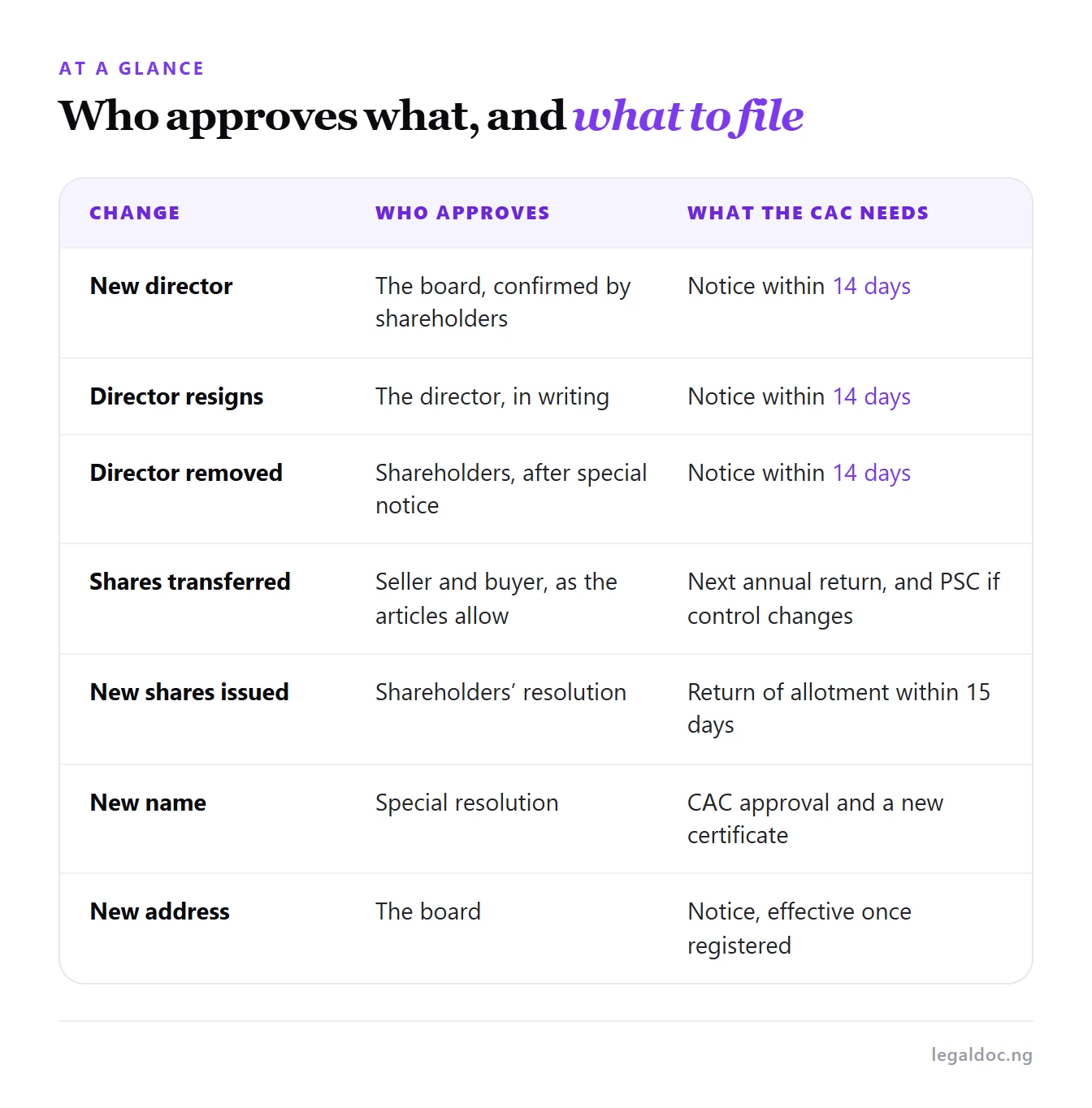
Every change starts with a written decision. Keep the resolution on file even after the filing is done.
Almost every change on this list begins with a resolution of the directors or the shareholders. A properly worded company resolution is the document the CAC, the bank and any future buyer of the company will ask to see.
How to change directors at the CAC
Appointing a new director
The board can usually appoint a director to fill a vacancy or add to its number, subject to the articles, and the shareholders confirm the appointment at the next general meeting. The new director must consent to act and must not be disqualified, for example by being under 18 or an undischarged bankrupt. File the notice of appointment with the CAC within 14 days, with the director's identification and details.
When a director resigns
A director can resign by giving the company written notice. The resignation takes effect as the notice says, and the company then files the change with the CAC within 14 days. The departing director should insist on seeing that filing done, because until it is, the CAC record still shows them as a director.
Removing a director
Shareholders can remove a director by ordinary resolution at a general meeting, even against the director's wishes and whatever the articles say. But the procedure must be followed exactly, because a removal done wrongly can be challenged.
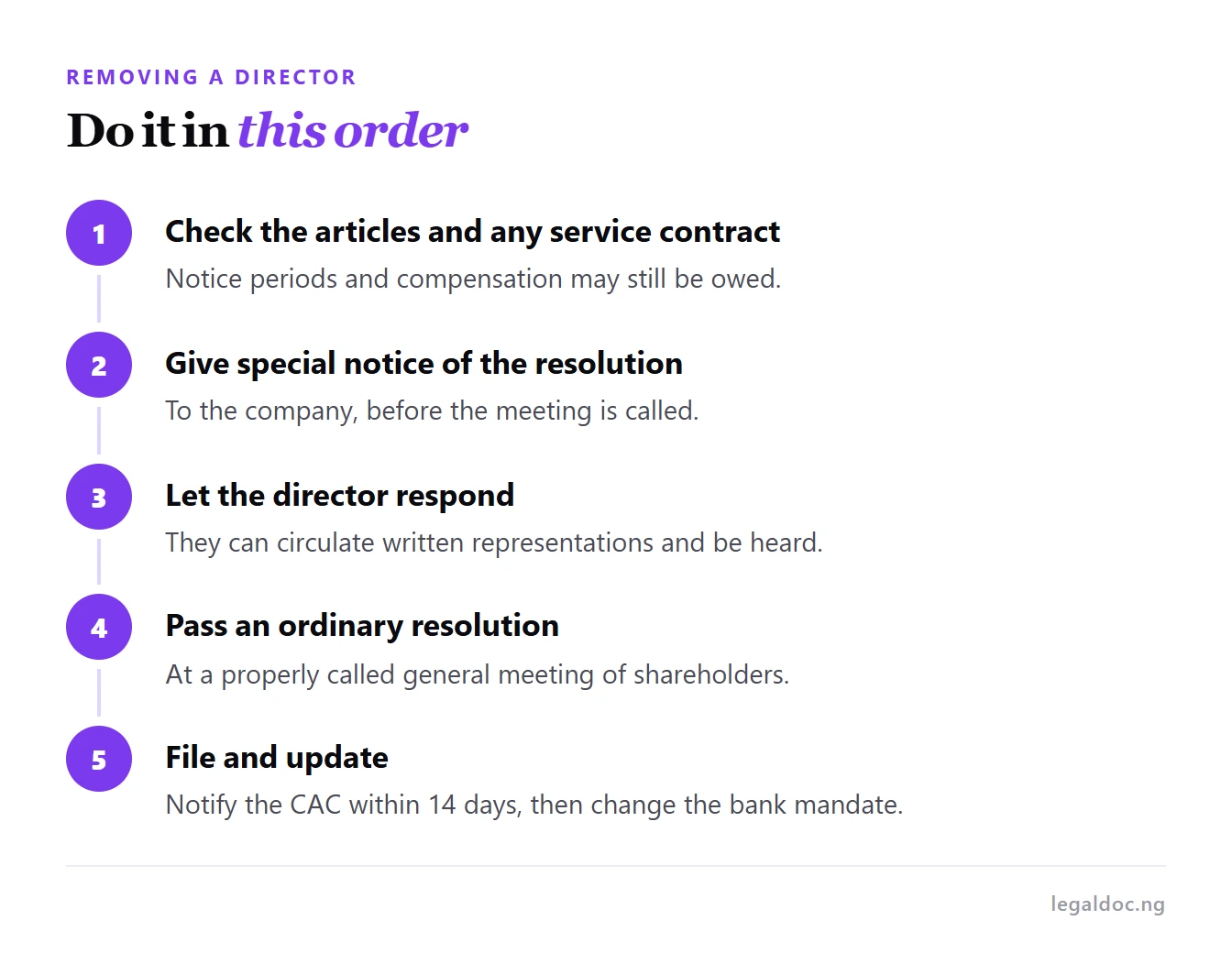
Removal ends the directorship, not the shareholding. A director who also holds shares keeps them.
Check any service contract first. A director who is also an executive may be entitled to notice or compensation under that contract, even though the removal itself is valid. If the director is also an employee, their employment needs to be ended separately and properly.
Changing shareholders
Selling or transferring existing shares
When a shareholder sells or gives away shares, the change happens inside the company first. The articles of most private companies restrict transfers, often requiring that shares be offered to the existing shareholders before an outsider, or that the board approve the buyer. Ignore those rules and the company can refuse to register the transfer.
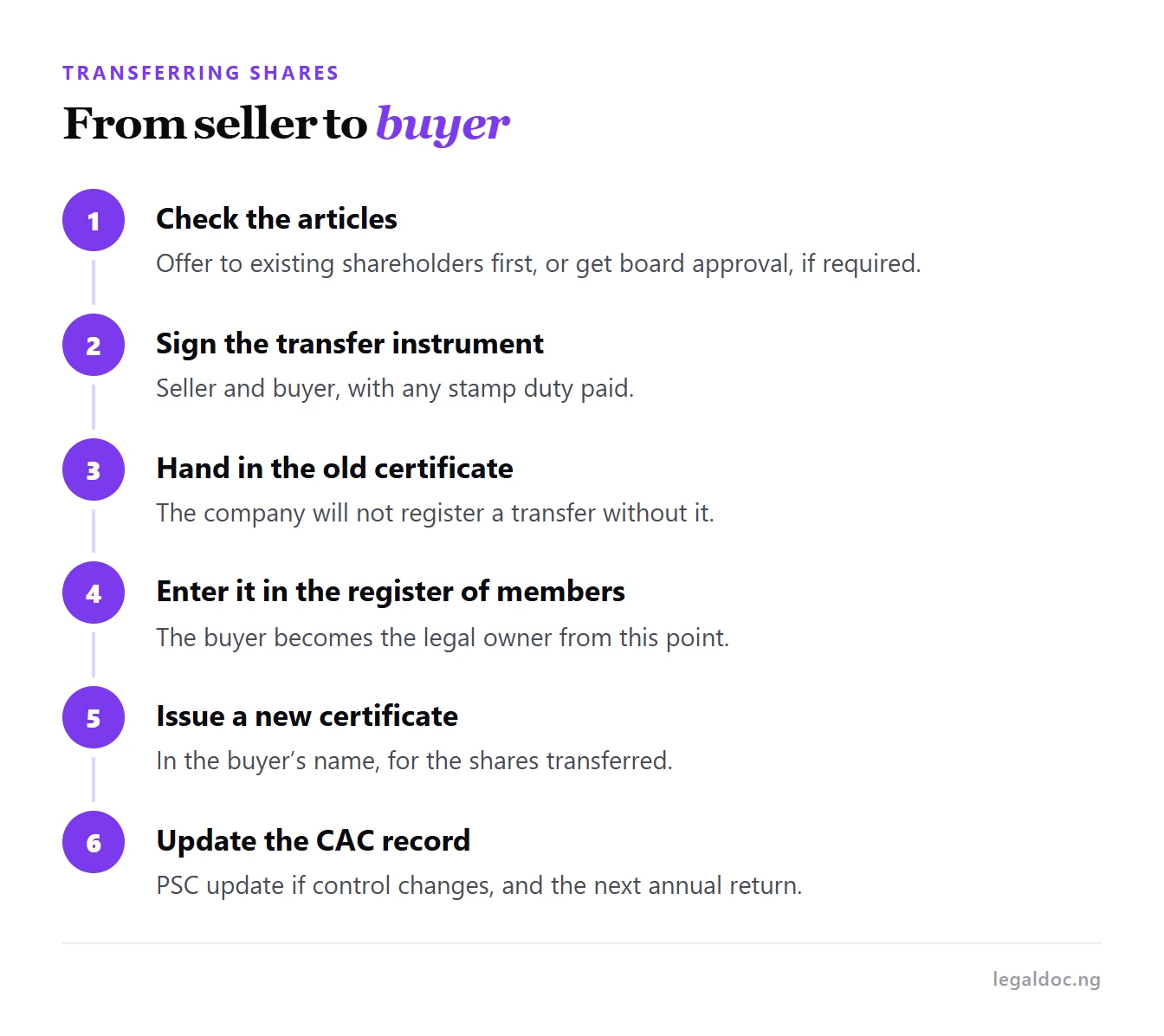
The register of members is the definitive record of who owns the company. Keep it up to date.
What do your articles say about removing a director? Ask
Upload the articles of association and LegalDoc+ explains transfers, pre-emption and removal, and drafts the notices.
Ask LegalDoc+The CAC does not register the transfer instrument itself. The change reaches the public record through the company's next annual return, and through an update to the register of persons with significant control if the transfer changes who controls the company. Because banks and investors rely on the CAC status report, file the annual return promptly after a significant transfer so the public record catches up. Our guide to annual returns explains how.
For a sale, put the terms in a proper share purchase agreement: the price, when it is paid, what the seller promises about the company, and what happens if those promises turn out to be wrong. If the buyer is joining the business rather than simply investing, a shareholder agreement should be signed at the same time.
Issuing new shares
Bringing in an investor usually means issuing new shares rather than transferring existing ones. The shareholders approve the allotment, and the company files a return of allotment with the CAC within 15 days, paying stamp duty and fees on any increase in share capital. Our guide to share capital in Nigeria covers the detail.
When a shareholder dies
Shares pass to the shareholder's estate and are transferred to the beneficiaries on production of probate or letters of administration, not by an ordinary transfer instrument. We explain the whole process in what happens to your company when you die.
Changing the company's name
A new name needs a special resolution of the shareholders and the CAC's approval, which includes the same availability check as a new registration. Once approved, the CAC issues a new certificate of incorporation in the new name. The company itself does not change: its RC number, contracts, debts and assets stay exactly as they were. Update your bank, your invoices, your website and any regulator that licenses you. If the name is refused, our guide to a rejected CAC name explains what to do.
Changing the registered address
The board decides on the new registered office, and the company notifies the CAC. The change does not take effect until the CAC has registered the notice, so until then, legal documents can still validly be served at the old address. File it as soon as you move, and redirect post from the old address in the meantime.
The mistakes that cause trouble later
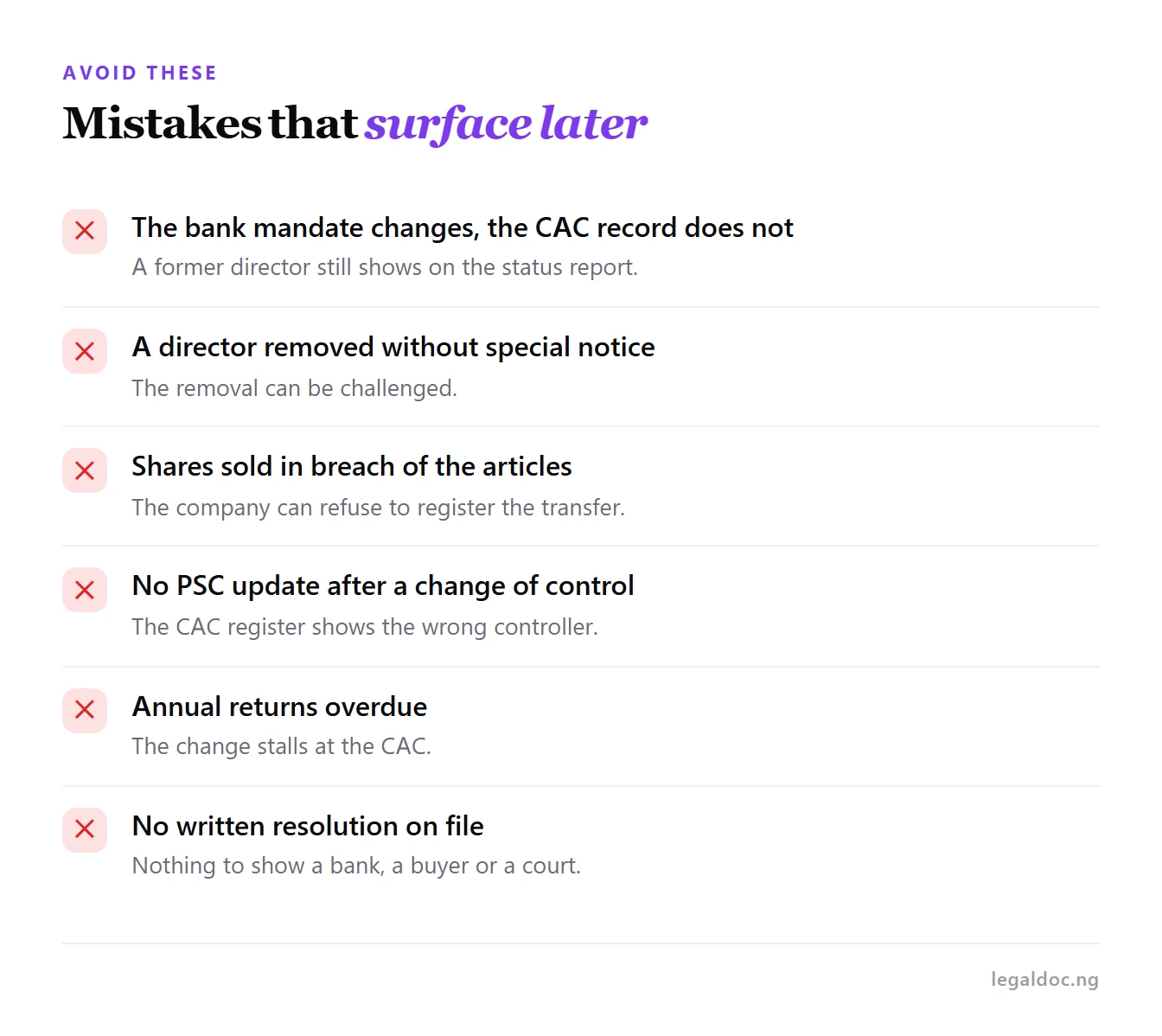
Each of these surfaces at the worst moment: a bank review, a sale, or a dispute.
Before any filing, check that the company's annual returns are up to date. Outstanding returns are one of the most common reasons a change stalls at the CAC.
Get the paperwork right with LegalDoc
Every change in this guide begins with a decision written down properly. LegalDoc's company resolution produces the resolution for an appointment, a removal, an allotment, a change of address or a change of name. For a share sale, the share purchase agreement and shareholder agreement are ready to complete.
For the documents specific to your situation, such as a special notice to remove a director, a director's resignation letter or a share transfer instrument, LegalDoc+ drafts them to CAMA 2020. Upload your articles of association and it will also tell you what they say about transfers, pre-emption and removing directors before you act.
Frequently Asked Questions About Changing Directors and Shareholders
How long do I have to notify the CAC of a change of director? File the notice within 14 days of the appointment, resignation or removal. Filing late can attract penalties, and the CAC record stays wrong until you do.
Can shareholders remove a director against their will? Yes, by ordinary resolution at a general meeting, after giving special notice and allowing the director to respond. A director with a service contract may still be entitled to compensation under it.
Do I file a share transfer with the CAC? The CAC does not register transfer instruments. The transfer is recorded in the company's register of members and reflected at the CAC through the next annual return, and through a PSC update if control changes.
Does changing the company name change the RC number? No. The company keeps its RC number, contracts, debts and assets. The CAC issues a new certificate of incorporation in the new name.
Can a director resign at any time? Yes, by written notice to the company. The company must then notify the CAC, and any service contract may require a notice period.
Where this leaves you
To change directors, shareholders, the name or the address, start with a written resolution, follow the articles, file within the deadline, and make sure the company's own registers, the CAC record and the bank mandate all end up saying the same thing. Done that way, the change is routine. Done casually, it waits quietly until the day somebody checks.